

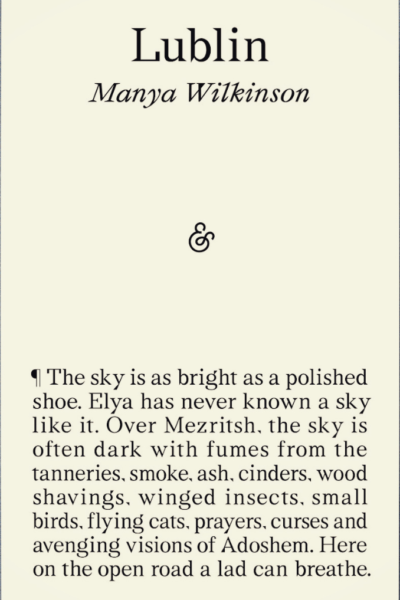
In Search of Impossible Places?: Lublin by Manya Wilkinson
Lublin is not only a road trip on foot in central Europe, nor a coming-of-age novel . . . It is the translation into fiction of the economic migrant’s existential condition, caught and lost in the endless borderland that extends between their deprived place of origin and the metropole’s illusion of socio-economic elevation and fulfillment.

Navigating Capital Cities in Chinatown and Lungo Cammino as the Undesired
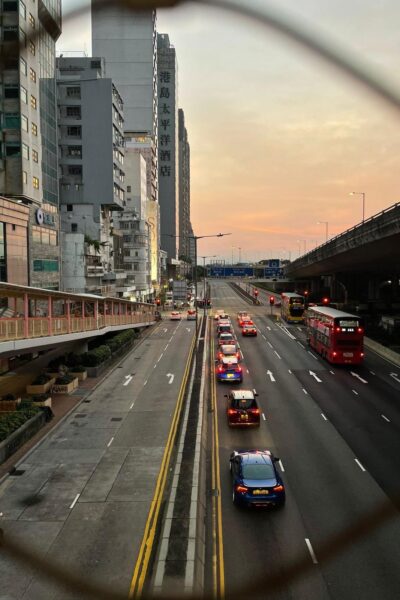
Love at Last Sight: Writing Hong Kong in Taiwan
Hong Kong is often represented as a port city—a colonial emporium, a gateway to China, a non-space of transit, a stop in multigenerational migrations, a floating city amnesiac about its past and uncertain about its future.

Inorganic City: A Living Autopsy of Tirana
To a certain extent, living in a “cool” city was the promised land that allowed people to swallow the bitter pill of the 1990s neoliberal shock doctrine.
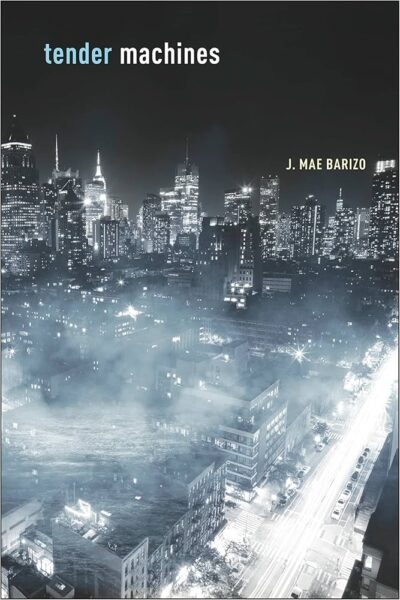
Squinting at the Gold Teeth of the Sun: A Conversation with J. Mae Barizo on Tender Machines
A city, and also a language, is not just a product of the literal body, but of the emotional and conceptual possibilities of consciousness itself.

Towards a Postcolonial Politics of Relatability: Translating People from Oetimu by Felix Nesi
Fiction that imagines the world from its so-called “peripheries” may in fact upend the way we perceive the concept of the “center” itself, reorienting the weight of worldliness towards the edge, the margin, the contact zone.
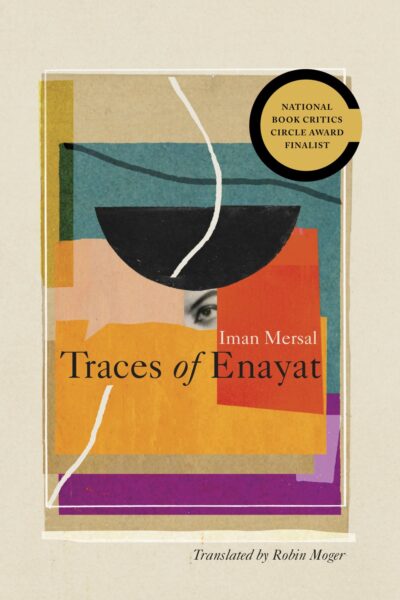
City Addresses: Iman Mersal’s Rihla through a Dis(-)appearing Cairo
As [Mersal’s] recursive and often discontinuous writing attests, the drive toward progress tends to entail an imperfect erasure, whose traces might resurface—as if through a palimpsest—if only one cared to look.
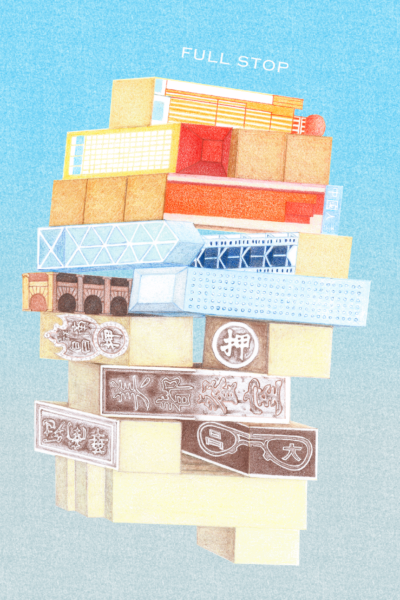
Dis(-)appearing Cities or: How I Learned to Stop Walking and Love the Empire
Read the introduction to our latest issue of the Full Stop Quarterly, “Literary Dis(-)appearances in (Post)colonial Cities.”

Rangi is my ancestor, your ancestor is money . . .
Failure doesn’t . . . mean we have lost or that we can’t live in a world where Palestine is free, where the Congo is free, where Hawai’i is free, where West Papua is free, and where Western Sahara is free. . . . Everything is broken, but it doesn’t mean that the horror our ancestors experienced or that we continue to bear witness to cannot be healed.
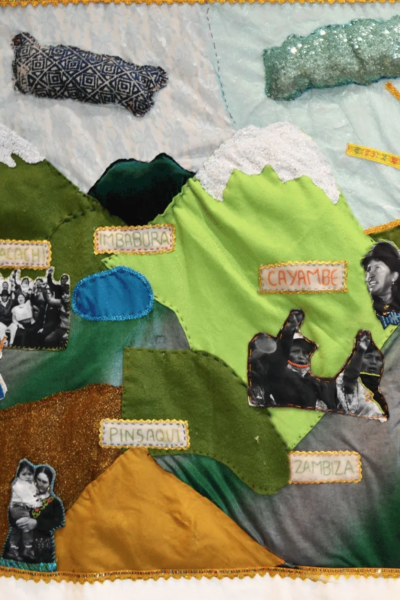
Freedom Sounds and Care Practices in Anti-Extractivist Mapping
Over the course of a year, Maizal collected sound recordings of the wildlife and waterflow of the Andean moorlands under threat from mining, as well as interviews with veterans of anti-mining activism from the pueblo Nangali. The result is an imaginative archive and ambitious cartographic experiment . . .