


Read in the broadest terms, in the context of literary modernism, INTIMATE TIES seems especially concerned with the psyche, sexuality, and repression.
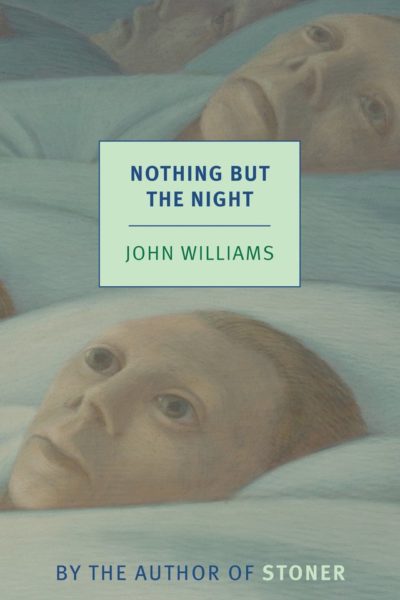
Nothing but the Night – John Williams
The last of Williams’s novels to be reissued, 1948’s NOTHING BUT THE NIGHT now marks the inevitable death knell of the Williams literary revival.
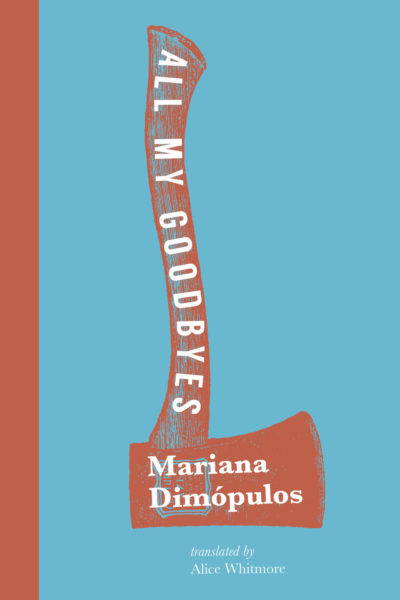
All My Goodbyes – Mariana Dimópulos
Dimópulos works directly against one of the age-old creative writing workshop adages: don’t lose your reader in time.

I’m Open to Anything – William E. Jones
The book, both in its physicality and content, poses a challenge not to conservative forces who would immediately shut it down, but rather to progressive and “open-minded” people who support queer writing — but only if it’s “literary” and respectable.
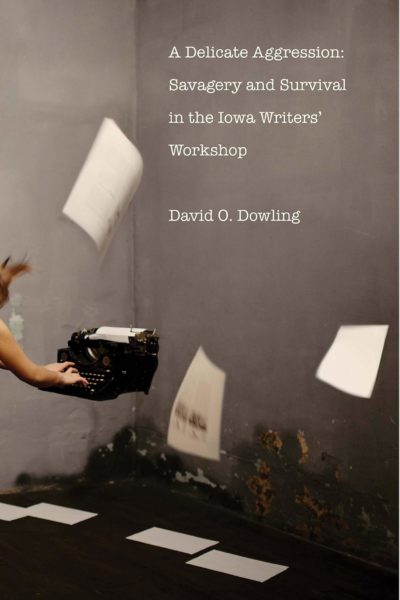
A Delicate Aggression – David O. Dowling
Dowling is uncritical and unsentimental in his portrayal of the mfa as the death-knell of creative solitude, spontaneous community-making, and writing for writing’s sake.
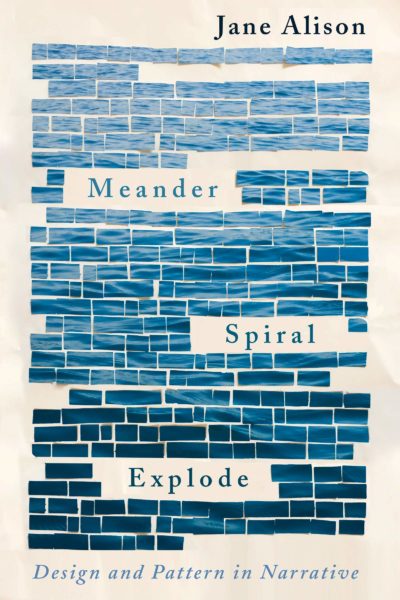
Meander, Spiral, Explode – Jane Alison
Why would the exploration of the formal possibilities (in all their complexity) not be just as crucial to the integrity of fiction as evoking emotion in the reader?

Max Havelaar or, The Coffee Auctions of the Dutch Trading Company – Multatuli
No anti-colonial tract more effectively debunked the, by then, three-century-old system which—tweaked and window-dressed to pacify the progressives of each generation—had enriched Europe while shredding colonized societies everywhere.

Binstead’s Safari – Rachel Ingalls
In many novels, the survival of a marriage symbolizes a return to normalcy, but Ingalls twists that convention by rendering marriage as a stricture on each individual’s autonomy.

Juliet the Maniac – Juliet Escoria
JULIET THE MANIAC displaces survival from its preferred position of totality i.e. restitution, and reframes recovery as a messy and unpredictable process of fragmentary retrieval.
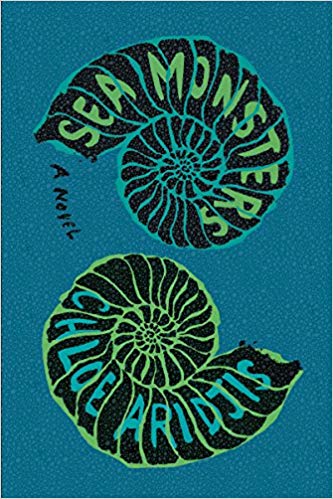
I’ve come to read the book as an alternate proximity to conflict: the paradox of Luisa’s sense of self collapsing and rebuilding without an obvious enemy to focus on amidst the uncertainty of incipient adulthood.