

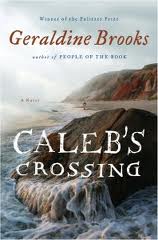
Caleb’s Crossing – Geraldine Brooks
Long, long ago in a rough-hewn version of what is now known as Martha’s Vineyard, a headstrong young Puritan girl met the first Native American man to graduate from Harvard College.
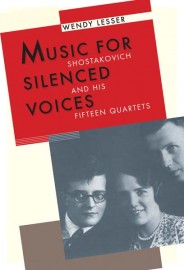
Music for Silenced Voices – Wendy Lesser
The composer, whose darkness and turbulence, even violence, seemed like a refuge for the teenage soul in its unsteadiness, was always Shostakovich. I suppose the pervasive sense of oppression in his music spoke to a teenager’s natural sense of oppression and scrutiny. Of course, Shostakovich’s sense of oppression came from the constant scrutiny and pressure of a totalitarian regime—a teenager’s comes from the sense that the whole world is a totalitarian regime.
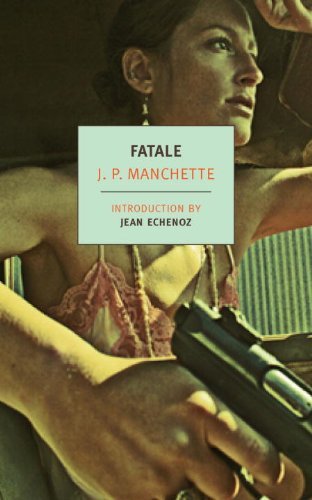
Fatale – Jean-Patrick Manchette
The genius of Manchette’s reimagining of noir is that his political sympathies never weigh the text down, but rather subtly reveal the resonances and inclinations already inherent in the genre.
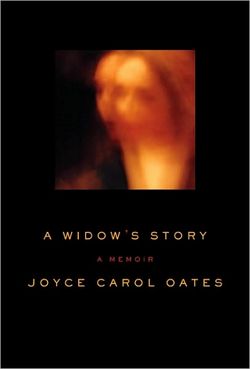
A Widow’s Story – Joyce Carol Oates
One emotion interrupts another in a series of convoluted, dash-ridden sentences that create a tangle of Dickensonian brambles, occasionally dotted with the softly familiar sight of a numbered poem amidst Oates’s prose. Unlike a reader of Dickenson, however, Oates’ reader must push her way up a mountain of words, slippery with confused thoughts and sharp with grief.

More so than the memory that death incites, Suicide is an exploration of forgetfulness and “memory’s caprices.” It’s a cruel irony, one that underscores the entire novel; that a defiant act meant to sharply etch a life into the minds eyes of the living ultimately does the opposite. No character gets a name, no character gets a face; only traces remain.
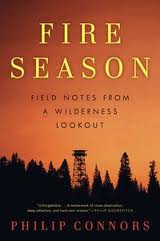
Whether Connors realizes it or not, his isolation isn’t so pure, nor his city living so alienating that he has to view himself as split between the two. That’s part of being American, containing those multitudes. That’s part of being human. And that’s what makes this book so incredibly enjoyable.
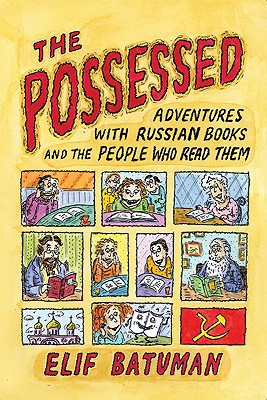
This is exactly what we need: more books that don’t force us to choose between enthusiasm and rigor, the ridiculous and the sublime, stories and arguments, the personal and the literary. If the theories we use to read novels don’t also help us read our lives, then we’ve missed the point entirely.
All the Time in the World – E.L. Doctorow
The stories are novelistic in scope, as each one ends with the bang of an action, event or revelation, but they are also quiet, compact, and unassuming – at least at first.
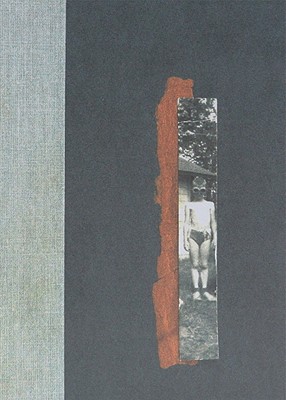
NOX is mystifying and exquisite, and, to reverse Carson’s metaphor, it opens doors that won’t close—even once you fold the book back into its box, you remain inside it.
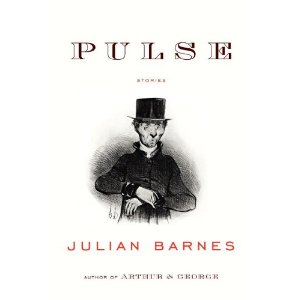
Barnes approaches big questions about human relationships and finds no simple answers, but in setting his parameters narrow, he is able to dig deep, forgoing the pyrotechnics of ardor and the convictions of youth for measured uncertainty and emotional ambivalence.