


Ten Thousand Saints – Eleanor Henderson
The book is less hagiography than Peter Pan, a band of orphans fighting their own way through a land of make-believe
The Great Night – Chris Adrian
Chris Adrian’s new novel THE GREAT NIGHT is a lively dramatization of the grief that attends love and its loss and the complicated ties that bind the present to the past.
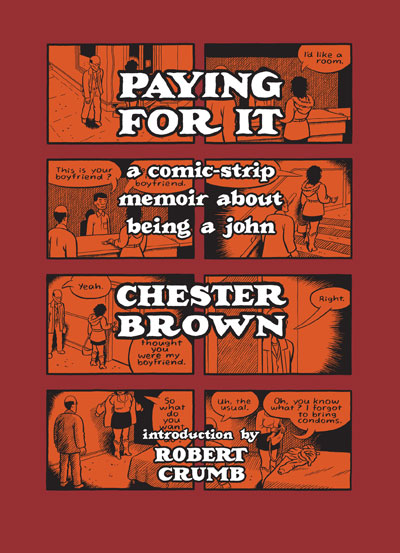
It’s telling that the gut reactions of my friends who formulate an opinion on the work after only seeing the title and a few pages match up (sometimes verbatim) with Brown’s depiction of his friends, who have been privy to his lifestyle for years.
Iphigenia in Forest Hills: Anatomy of a Murder Trial – Janet Malcolm
If criminal law is a set of competing narratives that succeed or fail on the strength of their storytelling, Malcolm both identifies with and transcends the methods of the court room—she shows the human identity of the impersonal law, the fragility and foibles of its practitioners and the mercenary power of its effect.
The Tao of Travel – Paul Theroux
At sixteen I traveled to England with my family, bringing an SAT workbook, a five pound dumbbell, and Virginia Woolf’s Mrs. Dalloway in my overstuffed suitcase. The only useful item of this set was the novel, the lightest and most logical item. On a trip, even a great trip, escape is necessary, and an immersive book is the best medium.
Day of the Oprichnik – Vladimir Sorokin
The atrocities of Sorokin’s dystopia are sparked not by futuristic weapons or surveillance devices but by good old-fashioned human nature.
Walking to Hollywood – Will Self
How uncomfortable is it when you sense that someone is appropriating obsolete forms of rebellion?
Caleb’s Crossing – Geraldine Brooks
Long, long ago in a rough-hewn version of what is now known as Martha’s Vineyard, a headstrong young Puritan girl met the first Native American man to graduate from Harvard College.
Music for Silenced Voices – Wendy Lesser
The composer, whose darkness and turbulence, even violence, seemed like a refuge for the teenage soul in its unsteadiness, was always Shostakovich. I suppose the pervasive sense of oppression in his music spoke to a teenager’s natural sense of oppression and scrutiny. Of course, Shostakovich’s sense of oppression came from the constant scrutiny and pressure of a totalitarian regime—a teenager’s comes from the sense that the whole world is a totalitarian regime.
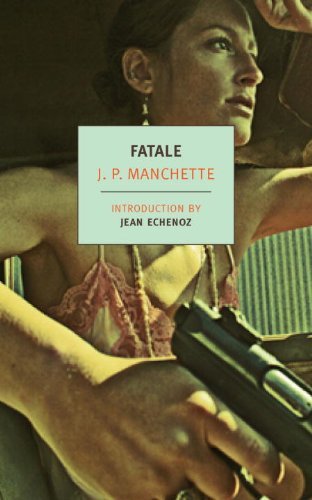
Fatale – Jean-Patrick Manchette
The genius of Manchette’s reimagining of noir is that his political sympathies never weigh the text down, but rather subtly reveal the resonances and inclinations already inherent in the genre.