


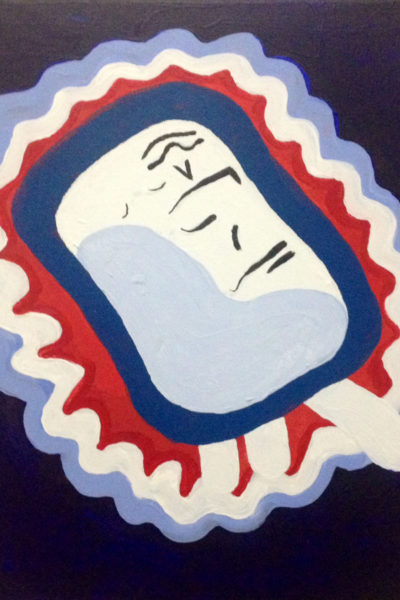
The general proximity of Alex Israel’s SPF-18
The Bridge, The Pyramid and The Spire
Parable as architecture; construction as crime
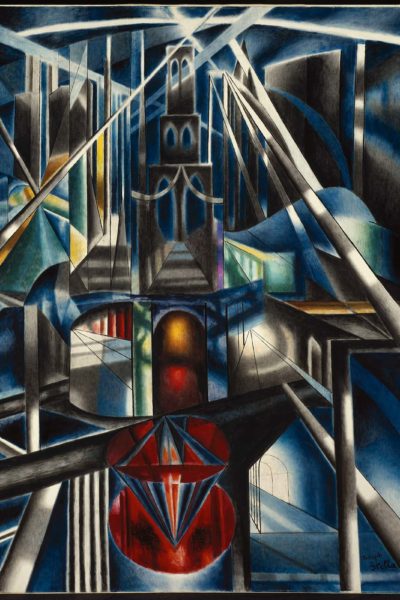
Democracy, Nature, Manifest Destiny
What makes Crane’s modernist epic so instructive for the twenty-first century is how it discovers ample room in nature for humanity’s freedom struggle.
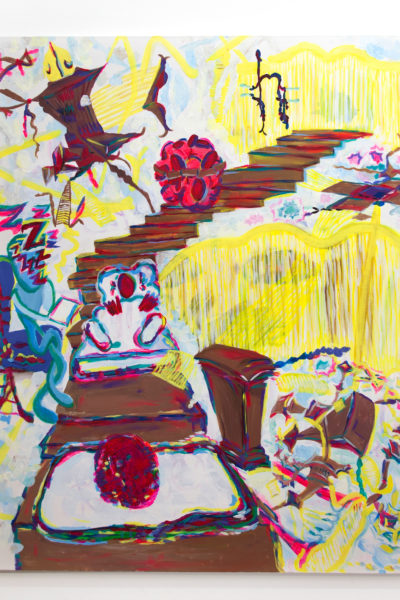
A dialectical reflection on graduate education, and God

There is a direct link between listening and life, perceivable in its absence. What we cannot say and what we cannot hear matter.

Utopia Can Be Banal: The Unfinished Ballad of Kenny Dennis
It’s too easy to write Kenny Dennis off as just a joke. While there are aspects of Kenny that seem wholly ridiculous, Cohn makes his story expansive and dark, and he settles on an exuberance that overcomes Kenny’s struggle.

Confounding Reading: Notes from a Conversation
I like the fact that you can see error moments that have been used to do something and, also, that there are other latent, inelegant bits that could be resolved differently. I like having both—utilised errors and potentially resolvable parts that nonetheless remain uncoopted.

“The daydream emerged as such an unbidden gift.”
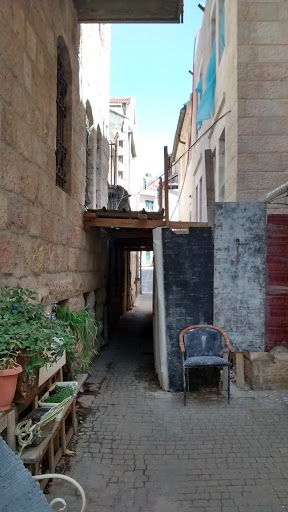
Graffiti In The Woods: Searching For Definitions of Jewish Space
We were holding our seder in a Jerusalem that was very much part of chol, though also part of the holy—we were at the table, in my apartment, in the city of Jerusalem, it felt different than when we do the same thing in Cleveland. Yet, we still long each year, for the transcendent Jerusalem.
Turning Back: On Cristina Rivera Garza’s THE ILIAC CREST
Garza’s boldest choice in the novel was to make her narrator the patriarchy. That is, his behavior is marked by secrecy, without intuition, his actions with women defined by received knowledge.