

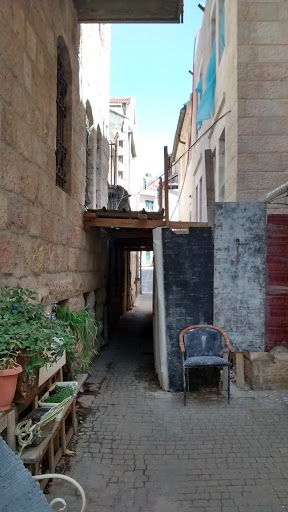
Graffiti In The Woods: Searching For Definitions of Jewish Space
We were holding our seder in a Jerusalem that was very much part of chol, though also part of the holy—we were at the table, in my apartment, in the city of Jerusalem, it felt different than when we do the same thing in Cleveland. Yet, we still long each year, for the transcendent Jerusalem.

Turning Back: On Cristina Rivera Garza’s THE ILIAC CREST
Garza’s boldest choice in the novel was to make her narrator the patriarchy. That is, his behavior is marked by secrecy, without intuition, his actions with women defined by received knowledge.
Google, Godwin, & the Philosopher’s Stone
Godwin’s conviction of the possibility of immortality, which only a few years ago might have seemed quixotic and a bit embarrassing, has come back into fashion.
The American Soldier in Arab Novels
Iraqi writers, by and large, have created worlds where the soldier’s perspective, either Iraqi or foreign, isn’t primary.

The Children’s Classic That Secretly Brought Existentialist Philosophy Into American Homes
Maybe there is another model for fantasy, one that does not simply eschew the Christian framework established by Tolkien and Lewis that so defines the genre, but complicates it, turning the focus away from destiny and back to moral choice, to human agency.

On Haiti and the Resistive Imagination
The zombie of the Revolution has now infiltrated popular culture, history, and creative expressions.

Teenaged harbingers of change in dystopias both imagined and real.

The real Florida is wedged between county roads leading to forgotten beaches, or deep in the neighborhoods where tourists won’t go. If you know where to look, you can find its edges.
What we talk about when we talk about the Space Age.
George Lippard: Gothic Architect
Lippard’s journalism was lurid and fictionalized, his historical writing Gothic, his Gothicism sentimental, based on real events, and often intended — like his nonfiction — to instruct and improve society.