

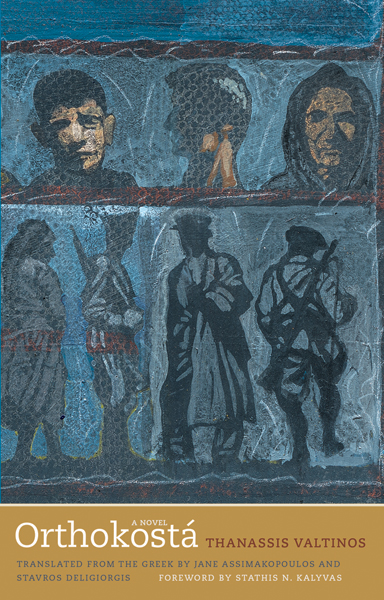
Orthokostá – Thanassis Valtinos
If we lack for now the Great Syrian Novel, we may have to make do with Orthokostá and our ability to extrapolate from the Mediterranean country that gave us the word “chaos” to a more easterly Mediterranean country that now manifests it.
One Hundred Twenty-One Days – Michèle Audin
In fact, the historian admits defeat.

These linked essays most closely resemble sessions of confession painfully eked out through much self-flagellation. The series of ruminations are a geography of particular obsessions.
The Surrender – Scott Esposito
The most fascinating aspect of THE SURRENDER is its project of reclaiming the thickness of language to describe a true self that is hermetically innate, but also temporally complex.
Reading From Behind – Jonathan A. Allan
Women, in READING FROM BEHIND, exist as oft-quoted scholars, but never as the sexual, multi-orificed and full-bodied humans that men are allowed to be.

The Party Wall – Catherine Leroux
The idea of the transplant is central to THE PARTY WALL, a polyphonic novel that uses ordinary lives to delve into extraordinary subjects.

You May See A Stranger – Paula Whyman
While I was reading YOU MAY SEE A STRANGER by Paula Whyman, I kept thinking about Carrie Bradshaw and my adventures in accidental homewrecking, and how Whyman’s protagonist Miranda Weber is, on paper, an utter mess in a way even Carrie would never let herself be.
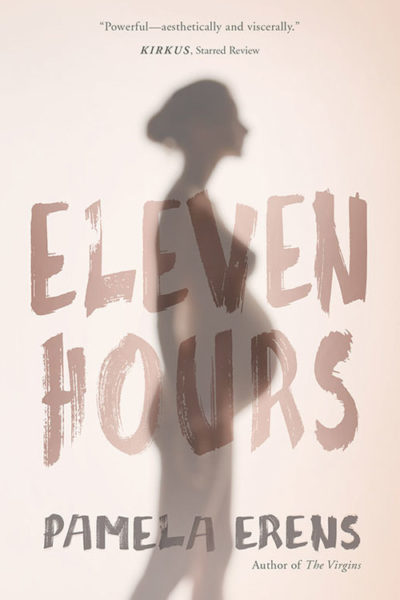
Pamela Erens gracefully brings the isolating effects of childbirth to the forefront of the pregnancy narrative. With Eleven Hours, Erens reminds us of the normalcy of choosing and indulging in solitude.

Their ability to learn at “super-human” speed may be interesting and terrifying, but ultimately, their artifice isn’t what draws us to these stories. Instead, it’s the attempt of these robots to make sense of and perform human emotion in the same ways we do that’s so uncanny and engrossing.

Evening Oracle – Brandon Shimoda
One of the most beautiful things about EVENING ORACLE — which is, I think, a beautiful book, elegantly wandering but not lost — is that its goal is not comprehension so much as communication.