


The book is as much about memory and feelings of guilt as it is about battles. At least, I hope it is.
Works of literature talk to each other; writers speak to each other through the ages. That’s exactly what Markson’s books bring up to the fore.
You come up with a color, or you come up with a word, or you come up with a chord, which maybe seems random, and then you just sort of decide, well, random or not, this is the door that I am going to enter.
Far from beginning to close the gap, the financial crisis and the recession have opened it even wider. It’s like nothing stops it. Every week there’s a story that is essentially that story.
There are sociologists and anthropologists who can do a great job of describing Italy. They have data, theories, studies, statistics. But a writer arrives at it through language and describes the society that is emerging through language.

Exorcism is just a lie we tell ourselves in order to survive.
In the novel, I built up the plot about halfway, and let the characters take over from there; I just watched what they did, and sometimes they did awful, gory things.
There’s often a sort of mysticism about war, wherein war is supposed to be a kind of ineffable experience that forever separates the veteran from the civilian in ways that cannot be expressed. I’m very wary of those sorts of claims.
The way I see it, the only truth a fiction writer is bound by is an emotional one.
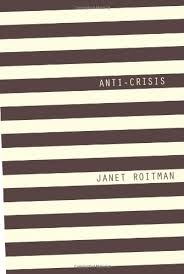
You can’t say that this object is a world with crisis and this object is a world without crisis. Empirically we can’t do that; it’s a logical distinction, we can only have crisis and anti-crisis.