


[Hajar Press; 2025]
Fredric Jameson once argued that works of fiction from the Third World are national allegories. While that may sound like a sweeping generalization, nation-making is an important creative project. More often than not, novelists have not praised the nation or mined national struggles for freedom to celebrate the nation. Instead, the project of this fiction has been to explore the violence that goes into the making of nations. It turns to the lives and perspectives of ordinary people to narrate the stories of the early careers of nations. These stories and forms have juxtaposed the macro and the micro: the grand narratives of freedom and the pain of lived realities.
Jameson’s argument has come to be strongly critiqued, but it has also been reinstated in several ways in the way new works of fiction from the Global South are judged. Just as Salman Rushdie’s Midnight’s Children is praised for narrating the history of independent India, critics look for foundational works of fiction to characterize other nation states. In recent times, Tahmima Anam’s trilogy—A Golden Age (2007), The Good Muslim (2011), and The Bones of Grace (2016)—has been called a fictional appraisal of how Bangladesh came to be. However, as a relatively younger nation-state in South Asia—founded in 1971 after a war with Pakistan—Bangladeshi fiction offers a new and necessary mode to the project of writing about the nation. Emerging from a fractured history of linguistic and political resistance, Bangladeshi fiction disrupts conventional, monolithic narratives of statehood that are usually pitted against the Empire. With The First Jasmines, Saima Begum writes of women raped by enemy soldiers (of the then West Pakistan, now Pakistan) during the 1971 war that led to the birth of Bangladesh. In this story about the nine months the women were brutalized, Begum expands the horizons of what it means to narrate, remember, and historicize the nation. Without dedicated accounts of the voices and roles of women, national literary traditions are incomplete.
It is 1971, during the Bangladesh Liberation War. Lucky, a young woman living in a small town, is an ordinary person. As a mother and daughter-in-law, she spends her days taking care of her family. Her husband, Waleed, is away working in London. The War slowly begins to enter everyone’s lives as West Pakistan’s military tightens its control over more and more cities in East Pakistan. Lucky’s sister, Jamila, was adopted by Lucky’s mother. On a day Lucky and Jamila decide to travel to visit their ailing mother, the War reaches them. As soldiers force their way into the town, they abduct all the women they see, including the two sisters. The majority of the novel dwells upon the space where all women are imprisoned. Nothing “happens” in this part of the story; instead, it offers a harrowing account of the violence and trauma the women face as they are violated and humiliated every day:
Most stayed silent during the day. Once night fell, some wept loudly, some softly. Some sang a wordless song that came from the gut, a mournful a cappella.
A lone window was squished between several patched-up panels, nothing visible from the outside but the thick black threads of hair of the women inside, shimmering liquid under moonlight. Some nights, even the moon deserted them.
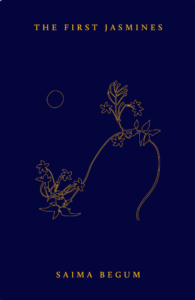
Beginning with the particular stories of Lucky and Jamila, the story extends to several other women—their pasts, their fears, their reflections on men and society, and their lack of vocabulary about their futures. Irrespective of whether they will ever go back home, there is no hope for dignity. The women exchange stories about motherhood, sisterhood, and care as they wait for their fate. Apart from the tragedies that they share, what recurs in the novel is the metaphor of jasmine, a flower that blooms at night, alluding to the possibility of survival and beauty in darkness. The flower appears when the women are about to be captured and continuously reappears as a memory and sometimes as a scent in the prison.
Begum stewards these stories with a lot of care, otherwise they would easily turn into a vehicle for shock. Instead of graphic accounts of violence, she offers a sensitive telling of how the women console each other:
‘Close your eyes,’ Jamila said. ‘The longer they stay open, the more you’ll remember when you leave.’
‘What I see with my eyes closed is worse than what I see with them open,’ Lucky replied. Terror possessed her body once again. ‘What will happen to Rayan if I don’t return?’
‘You will return, heaven couldn’t stop you from getting back to him.’
‘What am I against the heavens?’
‘A praying mother.’
The scene does not describe violence directly and yet is saturated with it. The exchange between the two sisters becomes a meditation on anticipation and fear. Jamila wants to help Lucky by thinking about survival— finding stillness now in order to resist later. The exchange is also representative of several other passages in the novel that show Begum narrating women’s lives through conversation. Women are philosophers, and the conversations among them are evidence of what one misses in not bearing witness to them. The image of “a praying mother” is a fragile counterforce to the violence of the camp, showing an affective force challenging a physical one.
The novel does have plenty of brutal moments, but the expression of the violence focuses on the impact it has. For instance:
Zoleyka, the oldest of them, somewhere in her thirties, never spoke. Each day, her fingers creaking with the smallest movement, she braided her hair in different patterns. Plait braid, single braid, lace braid, ladder braid, fishtail braid. When the soldiers came, they grabbed at the end and pulled her head like fishermen pulling a net full of bounty back from the sea.
Each morning tears pooled in her sockets, swished side to side, settled in even puddles and fell silently from both corners. Two streams from each eye. As if she had four eyes, feeling twice as much pain as the rest of them.
The obsessive description of Zoleyka’s braids ends up mirroring the description of what happens to her, connecting her condition to that of the fish. The comparison does not merely aestheticize Zoleyka’s suffering through an image of braided hair resembling fishing nets. Rather, it positions her within a structure of capture. Zoleyka is momentarily stripped of human subjecthood and figured as catch. The simile invokes the asymmetrical relation between predator and prey, where resistance is futile because the violence is systemic. It also draws attention to the body: what women tend to with care comes to be weaponized against them.
These are examples of the difficult task of witnessing pain. However, in certain moments, the omniscient third person voice and eye also turn to the soldiers:
The country was overridden with witches and whores. The soldiers had seen too much. Heard laughter in abandoned villages. Felt a whisper in their ear in the forest. Smelt perfume where bodies were piled up. Saw shadows pass by in darkness. A thing they couldn’t shoot or burn. Tasted sugar when they bit into the flesh of bloodied girls.
While the descriptions of violence against women are unsettling, such passages show the ways in which violence haunts the men too. The soldiers are surrounded by sensory experiences and visions that they cannot fully comprehend or control. Their violence is marked by fear, superstition, and paranoia.
Then, the perspectives of the men and women are juxtaposed:
God must’ve given us different eyeballs, men and women, they only seem to see the tree and never the direction of its branches …
These bits and pieces are anchored in folk wisdom, layered at multiple levels: the tree represents surface level reality and the branches, depth of perception; the tree might as well be the idea of the nation or the war while the branches are the lived experiences before and after the war. Women share an intimacy with the branches: they relate to the branches because both women and branches remain unseen by those in power.
The women share wisdom and life experiences as they talk, enduring the moments of their waiting together:
Whispered words of wisdom sailed across the room, free from the proprieties of the civilised world.
‘Never marry a man who needs to make a mistake to learn.’
‘I rejected any man with more than two siblings. I’m not learning all those names!’
‘Look at your mother-in-law’s hair. If she has a full head of hair, she’s the one giving everyone stress. The one with thinning hair? She’s the one taking stress from her stupid son.’
These lines introduce a sense of lightness in a novel about pain. The lightness of these exchanges is also central to the women’s survival. Humor allows them to momentarily reclaim ordinary rhythms of intimacy, gossip, and companionship, preserving forms of selfhood that the camp seeks to destroy. Such moments—and they are countless — made me pause to think about the depth of women’s courage, kindness, wisdom, and misery, which struck me so profoundly I couldn’t read the novel for long stretches. Notes of viscerality and subtlety follow one another in a dance between what can be said about the unsayable and what is left unsaid.
Finally, the “Mukti Bahinis” or “Mukti Joddhas”—freedom warriors of the guerrilla resistance movement that fought for the independence of Bangladesh—come and liberate the women; the whole nation celebrates freedom from Pakistan. The women are declared ‘birangonas,’ war heroines. But the nation is not the same as society, patriarchy, and family. They end up as ‘barangonas,’ prostitutes. In several ways, the women continue to live in conditions characterized by the psyche and structures that made their captivity possible. Such stories of violence and captivity end with rescue, but there is no rescue for women from violence of the day-to-day life. As Begum writes in her note at the end of the novel:
Though the women were given the title of ‘birangona’, literally meaning ‘brave woman’, signifying ‘war heroine’, by the new government shortly after the war, only few had access to the rehabilitation centres which offered treatment—including abortions and international adoption programmes for their babies—or received any money or vocational training that was promised through government schemes to help them restart their lives. Mostly, they were forgotten and shunned by society, and to this day little has been done to afford them recognition or provide them with social, economic or psychological support.
The First Jasmines comes at a critical time: Bangladesh is going through another period of turmoil following the 2024 student-led protests, state violence, and the fall of Sheikh Hasina’s government, which brings back memories of the Liberation War. Begum finds it critical to draw attention to women’s experiences, because governments since the moment of liberation have still not found it worthwhile to focus on women. Begum writes in her note at the end of the novel:
Against societal systems designed to suppress and hide their memories, I hope to finally turn the narrative back to their humanity, resilience and heart. To stories of women, nation and history filled with endurance, goodness and compassion. Their lives represented not just as victim, casualty, cipher or estimation, but as fighter, activist, carer, mother, daughter, sister, woman, girl, flesh and blood and human soul. Friends and lovers. Dreamers and thinkers. Architects of family and community.
If, as Jameson suggests, Third World literature is national allegory, Begum’s novel challenges the centrality of the nation. To invoke a metaphor shared above, Begum goes for “the branches” and not “the tree.” Through attention to the body, mind, and souls of women, she shows that the story of a nation is not only the story of its birth, but also the story of what that birth costs. Ultimately, Begum illustrates that the idea of the nation cannot be received as an uncomplicated gift; rather, like the late-blooming jasmines, true liberation is recognized only when we find the courage to sit with its scent in the darkness.
Soni Wadhwa teaches English at SRM University, Andhra Pradesh, in India. She is a regular contributor to Asian Review of Books.
This post may contain affiliate links.