


The following is an introduction to the latest issue of the Full Stop Quarterly, edited by Full Stop Fellow Natália Affonso. You can purchase the single issue here or subscribe at our Patreon page to get every issue and more.

I have been chewing on tender and its unfoldings — from tenderness to being tenderized — for quite some time. Back in 2019, I translated a number of poems by tatiana nascimento (some included in Cuíer, Two Lines Press 2021, and Lunduzinho, Ugly Duckling Presse 2022) where flesh met meat. There, tenderizing referred to a discarded lover’s heart and to a critique of the meat industry. Tenderness also revealed itself from between the thighs of lesbian lovers, their intimacy a balm against a system that wanted nothing more than to break them down. These images stayed with me. The multiplicity of meanings around tenderness began to inform the way I think about how we relate as humans, about how we communicate: from our physical tongues to multiple languages, from the literal to the metaphorical. This is how Tender Tongues, my Full Stop quarterly edition, came to be.
My idea was to see what others thought of the hierarchy of tongues, positionality, the power (imbalances) of translation, and the possibilities that being from multiple cultures and/or having a varied linguistic background make way for. I was interested in the violence that numbs and tenderizes us — how artists and critics, especially from the so-called Global South, have fought, refused, and used it. I was also curious about how looking alongside and beyond the frame of oppression can provide care and tenderness: healing, being in community, and building more liveable worlds.
I was also particularly interested in Full Stop’s mandate to support emerging editors, critics, essayists, and reviewers, encouraging guest editors to put out issues with a mix of seasoned, mid-career, and upcoming writers. In the United States — and pretty much anywhere else, I would guess — publishing remains a heavily gate-kept arena, which is no news to those of us who have been “emerging” writers, translators, critics for so long that even a deep-sea anglerfish, a dweller of oceanic depths, “made it” to the top before we did (and she left a mark: her indelible pen name, “black seadevil,” her surfacing sadly soon-followed by her death. No doubt her preference would have been to stay obscure.).
•
•
•
From the overcentralization of the MFA experience as the best path both for writers and editors who need to build a network, to lack of clarity around multiple processes — like pitching and editing, or how to enter the industry with a real prospect of career growth — to unlivable wages, to exorbitantly expensive conferences, workshops, to seeing prominence, space, and marketing budgets being given mostly to those who were born with a network already in place — or who are willing to play the game and re-shape themselves to fit certain boxes — “making it” in publishing can feel unattainable, or it can feel like it requires compromising on some of the ideals that make us who we are.
I had planned on writing an essayette entitled “backstage” to share more of the “behind the scenes” of this publication process: the beautiful exchanges, failures, half-completed pieces that fell through, lessons I learned. The call for pitches yielded fabulous proposals from all around the globe. Many contained so many threads that they could be seen as book projects. With more time and resources I would have loved to have offered a workshop on how to make essay outlines more streamlined. I wished I had been able to engage more meaningfully with all of them. I wanted to write about how so many factors that are made to seem external to literature — wars, disease, disability, climate and other disasters — deeply affected and re-shaped this volume. I was struck by how much the content of the issue shifted as life kept on unraveling.
•
I am extremely proud of Tender Tongues. I hope you will see the tender loving care that went into the making of it. May you enjoy the many threads that intertwine the pieces included in this volume: although the authors were not in active conversation as they wrote their contributions, there are many interconnections that make up the fabric of the Tender Tongues knowledge quilt.
“Essays” opens up with Myriam J. A. Chancy’s “Borrowed Tongues: Writing from Another Country,” departing from the question: “how can the use of an acquired tongue assist the postcolonial writer in making herself legible in a world in which her invisibility is prescribed?” Thinking alongside other writers from the Global South, she muses on how multilingualism and one’s diasporic condition can hold the potential to shift power dynamics. Also invested in the dynamics of power hierarchies, in “‘before the fuckers catch us’: transMad Poetics and Epistemic Flight,” Cavar advances their concept of a transMad poetics by analyzing how different creatives make use of opaqueness and concealment to resist cishetero-racial-ableist capitalist demands. Their work outlines existence with/ in their own language beyond those parameters. Then, Lucas de Lima centers Black and brown writers and artists in their investigation of how rituals — from creation, to performance, to evocation, to remembering historical rites — can liberate world-building from the hold of colonial aesthetics in “Spiritual Blueprints in the Time of Rupture”. Lastly,
“dreaming without sleeping:
capitalism, racism, loneliness
motherhood. & dreams.”
by tatiana nascimento translated by Jess Oliveira is the result of an essay-turned-translation-experiment which I had dreamed of since first conceptualizing this special issue. tatiana’s unique aesthetic, Jess’ translation craft, and my translator-editorial touch come together and make part of the editorial process visible. Marginalia and copy editing marks make way for other possibilities to unfold given that our exchanges, including multiple translation options, remain on the page.
In “Interview,” Alton Melvar M Dapanas offers us a beautiful exchange with Dr. Noeme Grace C. Tabor-Farjani, a Libya-based Filipino educator author, about writing, motherhood, publishing, belonging (or not) to multiple geographical locations and literary traditions.
For “Book Reviews,” Annaya Baynes reviews The Rage Letters, a novel by Valérie Bah translated from French by Kama La Mackerel, which journeys through the lives of interconnected Black and queer characters in Montreal: their joy, frustration, and sites of anger. Annaya looks at both the original (Les Enragé·e·s, Les Martiales, 2021) and the translation (Metonymy Press, 2023) to bring us some cross-language considerations. Claire Foster analyzes The Joyful Song of the Partridge by Paulina Chiziane translated from Portuguese by David Brookshaw (Archipelago Books, 2024), a story in which Chiziane’s sharp pen transforms Mozambican tales and tells the main character’s, Maria das Dores, at first, unknown, then, unforgettable life story. Fernanda Vieira, from an Indigenous Brazilian perspective, looks at Thunder Song: Essays by Sasha LaPointe, an Indigenous author from the Upper Skagit and Nooksack Indian Tribe. Finally, Yasmin Desouki reviews River in an Ocean: Essays on Translation, a collection on the labor and practice of translation from translators and wordsmiths who belong to the global majority (trace press, 2023).
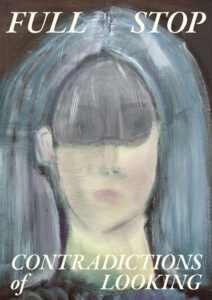
Tender Tongues, from its cover to images throughout, is illustrated by the brilliant Sally Chen, who was kind enough to provide an artist statement in which they share how the pieces inspired their artistic concept. Their engagement with the Tender Tongues theme, from the beginning, touched me deeply. I am thankful for the gorgeous visuals that multiply the meanings of the written words in this issue.
For now, I am thankful to the Full Stop editorial team for all their support, guidance and insights, especially Fiona Bell and Emily Alex.
I remain committed to unveiling some of the mysteries of the hegemonic side of the publishing world, and protecting the mysteries of those of us who are often pushed to make ourselves legible within its parameters.
Tenderly,
Com amor,
Natália Affonso
From a city near Los Angeles, CA
United States
February 2025
This post may contain affiliate links.