


Roe v. Wade: Fifty Years After – ed. Rhae Lynn Barnes & Catherine Clinton
These essays demonstrate that Roe is about far more than the rights of individual states to legislate abortion.
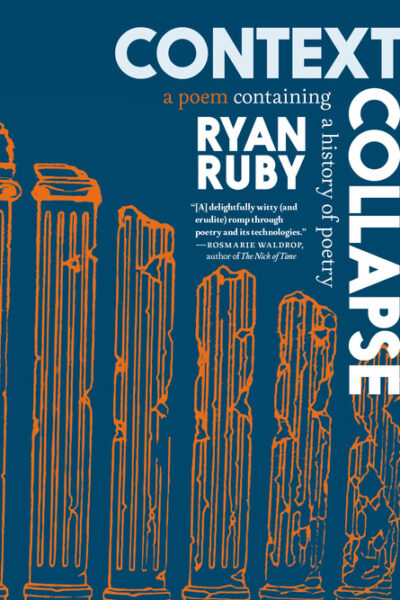
Context Collapse: A Poem Containing a History of Poetry – Ryan Ruby
Market and technological forces are at the heart of Ruby’s analysis: How does poetry change in different social roles and contexts? How do different technologies and audience expectations shape poetry, and what happens when we think of poetry itself as a technology?

The Propagandist – Cécile Desprairies
Desprairies challenges the reader to inhabit a morally fraught protagonist. Why would someone collaborate with Nazis, the novel asks. Who would do such a thing?

Years and Years – Hwang Jungeun
Sejin and Yeongjin seem to be aware of the pitfalls of their mother’s refusal to speak of her past . . . but they ultimately do the same themselves. The three women take silence as a given, assuming that speaking would only lead to more harm.

Schrödinger’s Wife (And Other Possibilities) – Pippa Goldschmidt
Goldschmidt turns abstruse theories into metaphors of interpersonal relation, uncovering the hidden labor of scientific research and recovering the technical language of physics for humanistic consideration.
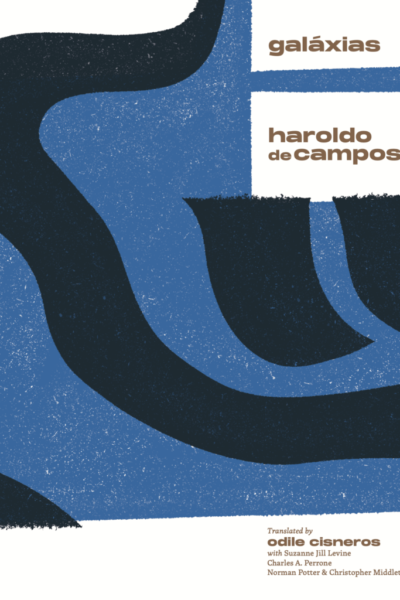
GALÁXIAS takes not only São Paulo, but the entire universe in its orbit.

ESTA BOCA ES MÍA – Lupita Limón Corrales
Communities are made of relationships not only between people but between people and places—between us and our homes, the plants that grow on the sidewalk, the basements we gather in to chat and strategize.

The Degenerates – Raeden Richardson
Maha’s gift is born of grief, of the fear and pain that has defined her own life, and she too is a degenerate.

The space of the imagination in all its surreality is the space in which the stories [in Bhanu Pratap’s CUTTING SEASON] are anchored.

The Burning Plain – Juan Rulfo
The real perpetrator of violence in THE BURNING PLAIN is [the] cycle of poverty and the systems that engender it. The characters in these stories are so vulnerable that their existence rests on an edge, and the smallest upheaval or change becomes magnified and topples them completely.