

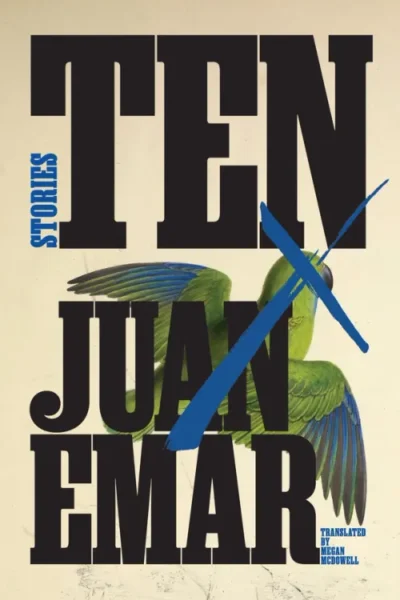
In [Juan Emar’s] work . . . we can discover the possibilities of a literature that both resists and reconciles the European tradition with the rest of the world. It is in writers like Emar that we can find what Goethe called a Weltliteratur—a World Literature–and a Latin American tradition which . . . has vigorously and defiantly come back to life.

Phantom Pain Wings – Kim Hyesoon
If loss is a small hammer veining an otherwise intact shell, then grief is what shatters that shell into pieces in Kim Hyesoon’s complex collection PHANTOM PAIN WINGS.
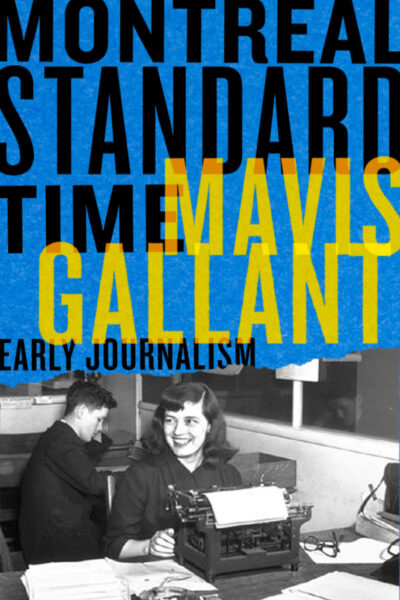
Montreal Standard Time: The Early Journalism of Mavis Gallant
A self-effacing stylist, Canadian but not, an expat in Paris decades after Stein and her lot, after even Baldwin, impossible to categorize. Who is she, really? A writer very much her own.

A member of the Métis Nation and an Edmonton resident, Kerr . . . highlight[s] what happens when activism does not move the needle in the intended direction.

Holy Winter 20/21 — Maria Stepanova
Stepanova’s collection is deeply ambivalent about the role of historical rhymes

[Giles] feels like she is the bridge: stuck, supporting everyone else in her life, carrying a weight she can’t quite pinpoint.

Cigarettes Until Tomorrow: Romanian Poetry
It is normal to mourn a dying planet, it is common to feel isolated and embittered in this new era, but the true loss would be to accept such disaffection, to not fight for a better tomorrow.

Yard Show – Janice N. Harrington
The Black yard show is in dialogue with the Middle American landscape; the padlocked garden and the pockmarked prairie blur each other’s boundaries.

Characters, like Lim’s stylistic choices, shift and transform . . . The novel suggests identity is a beguiling, perhaps not even achievable thing: just mirror, marriage, and mirage.

Mahato’s poetic attention interacts with ideas and observations about community and climate, and the spaces in her language are literally filled in with color.