


If rapacious capitalism depends on fracking our attention and selling it back to us, practices of radical attention can help us to imagine alternative forms of social relations and selfhood, forms which moneyed interests claim are either naive or undesirable.

Our sense of genre has evolved so intensely that you can use them quite quickly to bring in other ideas or ideas that we might not expect from a detective story or an action scene. That disjuncture or that conflict can be interesting and comical.

Stubble Archipelago – Wayne Koestenbaum
You could almost believe it was possible to get Chelsea out of this book, devoured already by real estate; maybe we could even have Lana Turner again.
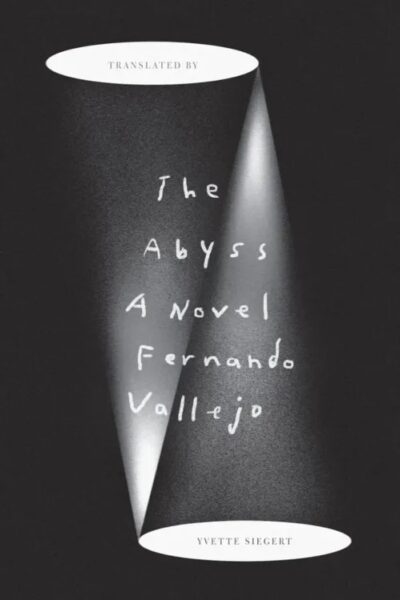
In The Abyss, Vallejo reevaluates his relationship with Colombia, his family, and his queerness, even though there appears to be no space for absolution.

Nauetakuan, a Silence for a Noise – Natasha Kanapé Fontaine
In NAUETAKUAN, Indigenous characters’ laughter disrupts the serious, restrained norms of literary fiction.

I think one of the reasons I’m not a novelist is because I can’t imagine myself into the space of being able to see the whole. I’m not saying that wouldn’t ever happen, but I would struggle, I think . . . I tend to see in patchwork.

Personal Score: Sport, Culture, Identity – Ellen van Neerven
By looking at First Nation sporting lineages and lexicons, van Neerven invites us to imagine the different roles sports may play in our lives and in the world beyond dominance and defeat.

The Poet and the Silk Girl – Satsuki Ina
At first glance, The Poet and the Silk Girl is richly visual, with many photographs and documents reproduced alongside the text. But it’s also a book about language: the familect of a second-generation couple and their children, and the therapeutic powers of translation and writing.

My Cousin Maria Schneider – Vanessa Schneider
Perhaps a story told through the prism of deep love will always be molded to the contours of its creator; a twinning of subject and author.

Whenever I’m beginning something new . . . I’m always looking for a constraint of some kind. Some kind of blueprint inside the work that tells me how it works.