


Phantom Pain Wings – Kim Hyesoon
If loss is a small hammer veining an otherwise intact shell, then grief is what shatters that shell into pieces in Kim Hyesoon’s complex collection PHANTOM PAIN WINGS.

Julia Kornberg & Jack Rockwell
The West might want us to think of ourselves as different and peripheral . . . they might urge us to portray images that fulfill their prejudices about Argentina, [but] we can have a more universalist approach and write, essentially, about whatever we want, and it will still be Argentine literature.
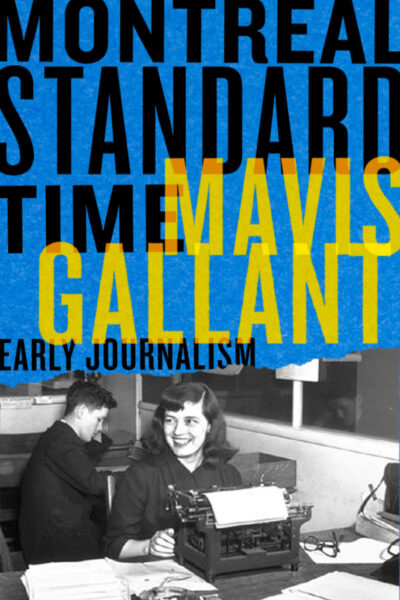
Montreal Standard Time: The Early Journalism of Mavis Gallant
A self-effacing stylist, Canadian but not, an expat in Paris decades after Stein and her lot, after even Baldwin, impossible to categorize. Who is she, really? A writer very much her own.

A member of the Métis Nation and an Edmonton resident, Kerr . . . highlight[s] what happens when activism does not move the needle in the intended direction.
Holy Winter 20/21 — Maria Stepanova
Stepanova’s collection is deeply ambivalent about the role of historical rhymes

Life doesn’t make sense to us, disastrous and uncomfortable events happen suddenly, and without warning. It only makes sense, then, that stories should do the same.

[Giles] feels like she is the bridge: stuck, supporting everyone else in her life, carrying a weight she can’t quite pinpoint.

Cigarettes Until Tomorrow: Romanian Poetry
It is normal to mourn a dying planet, it is common to feel isolated and embittered in this new era, but the true loss would be to accept such disaffection, to not fight for a better tomorrow.

Yard Show – Janice N. Harrington
The Black yard show is in dialogue with the Middle American landscape; the padlocked garden and the pockmarked prairie blur each other’s boundaries.

Maybe for the reader, the book itself is like a substitute for a crime, or a certain kind of violence which might otherwise have been turned on the world somehow.