

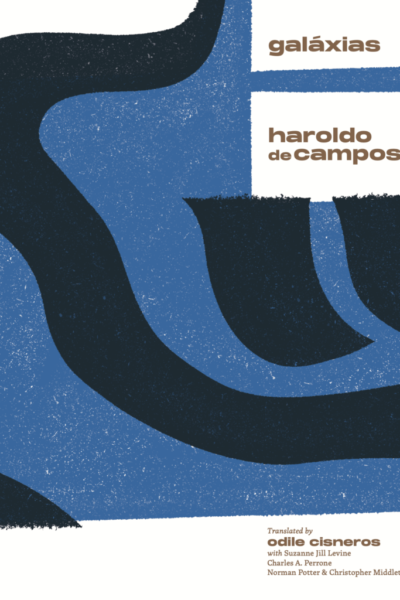
GALÁXIAS takes not only São Paulo, but the entire universe in its orbit.

ESTA BOCA ES MÍA – Lupita Limón Corrales
Communities are made of relationships not only between people but between people and places—between us and our homes, the plants that grow on the sidewalk, the basements we gather in to chat and strategize.

The Burning Plain – Juan Rulfo
The real perpetrator of violence in THE BURNING PLAIN is [the] cycle of poverty and the systems that engender it. The characters in these stories are so vulnerable that their existence rests on an edge, and the smallest upheaval or change becomes magnified and topples them completely.
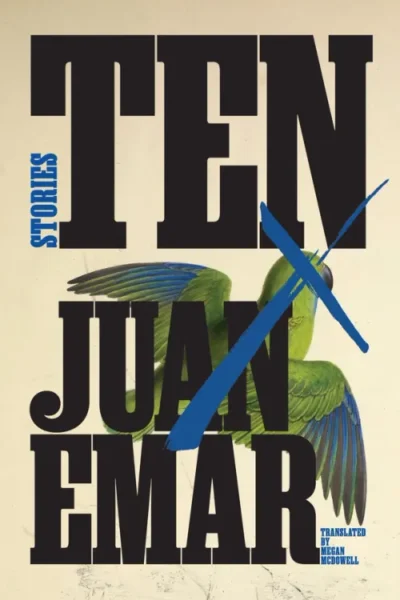
In [Juan Emar’s] work . . . we can discover the possibilities of a literature that both resists and reconciles the European tradition with the rest of the world. It is in writers like Emar that we can find what Goethe called a Weltliteratur—a World Literature–and a Latin American tradition which . . . has vigorously and defiantly come back to life.

My grandmother’s house, which is the house in WOODWORM, is charged with strange energy. Nobody wants to sleep there alone, and it is common to have this feeling of being accompanied even if you don’t see or hear anyone.

Phantom Pain Wings – Kim Hyesoon
If loss is a small hammer veining an otherwise intact shell, then grief is what shatters that shell into pieces in Kim Hyesoon’s complex collection PHANTOM PAIN WINGS.

Julia Kornberg & Jack Rockwell
The West might want us to think of ourselves as different and peripheral . . . they might urge us to portray images that fulfill their prejudices about Argentina, [but] we can have a more universalist approach and write, essentially, about whatever we want, and it will still be Argentine literature.

Holy Winter 20/21 — Maria Stepanova
Stepanova’s collection is deeply ambivalent about the role of historical rhymes

Cigarettes Until Tomorrow: Romanian Poetry
It is normal to mourn a dying planet, it is common to feel isolated and embittered in this new era, but the true loss would be to accept such disaffection, to not fight for a better tomorrow.

The Obscene Bird of Night – José Donoso
Donoso poses the same question to the novel form that he poses to the aristocracy: What is the monstrosity that beauty and order are trying to suppress? We enter a novel where timelines are hopelessly confused, boundaries between characters are thin to the point of nonexistence, dark magic abounds.