


Geared to Machine as Metaphor and Driver: An Interview with Michael Salu, Part I
There’s an intense metaphysical battle for the soul unfurling. One’s will and agency is funneled through coiling mechanical algorithms by technologists—so knowing exactly what cognitive levers to pull and how is of great consequence.

Vantage Points: On Media as Trans Memoir – Chase Joynt
A curious mix of reflection and commentary on male privilege and abuse . . . frame[d] . . . through the theories of Marshall McLuhan, someone who fascinates [Joynt] both as an academic and as a distant relative.
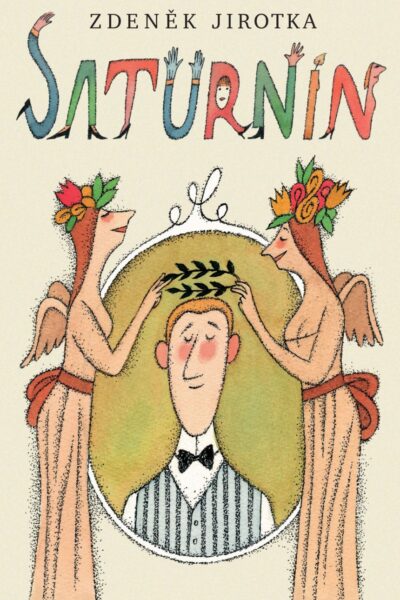
Saturnin wants his master to be an adventurer, but he doesn’t merely plan or dream: He acts on his fantasies, creating situations that force his master out of his banal existence and into the unexpected.

Dis(-)appearing Cities or: How I Learned to Stop Walking and Love the Empire
Read the introduction to our latest issue of the Full Stop Quarterly, “Literary Dis(-)appearances in (Post)colonial Cities.”

Fair to Look Upon – Mary Belle Freeley
Without Eve’s disobedience, there would have been no progress, advancement, or human intelligence, and for that, in Freeley’s view, Eve deserves “a profound salaam of admiration and respect” as “the first courageous, undaunted pioneer woman of the world.”

Roe v. Wade: Fifty Years After – ed. Rhae Lynn Barnes & Catherine Clinton
These essays demonstrate that Roe is about far more than the rights of individual states to legislate abortion.
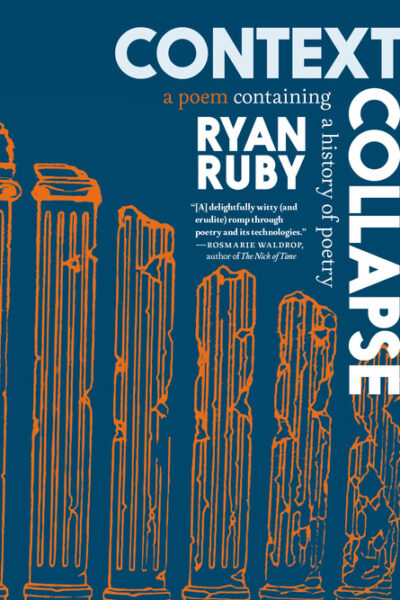
Context Collapse: A Poem Containing a History of Poetry – Ryan Ruby
Market and technological forces are at the heart of Ruby’s analysis: How does poetry change in different social roles and contexts? How do different technologies and audience expectations shape poetry, and what happens when we think of poetry itself as a technology?

The Textbody: Rendering the Body’s Divergences
The body can guide the process of its own translation if its author will let it. An expert at adaptation, it already knows how to exist on the page.

The Propagandist – Cécile Desprairies
Desprairies challenges the reader to inhabit a morally fraught protagonist. Why would someone collaborate with Nazis, the novel asks. Who would do such a thing?

It’s still an open question in my mind whether writing can inspire or support good and loving actions at the scale that it facilitates and fuels evil ones.