


I met Keila Vall de la Ville in New York in 2024, when I was on tour with my book. We are both Venezuelan, immigrant writers that have made the U.S. their home for a long time. But the reality is that I felt like I already knew her. It’s unfair, and wrong, to presume to really know a person based only on what they write, but when I encountered Keila’s first novel, Los Días Animales (published in English as The Animal Days, translated by Robin Myers), it was difficult to make the distinction between writer and protagonist. The emotions she brought forward were primal and vivid, like they were happening in real time, right in front of me.
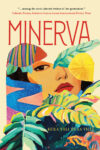
Minerva (also translated into English by Myers) is her latest novel, about a young dancer raised in Caracas by a polyamorous triad of artist/intellectuals, who migrates to New York after a traumatic encounter with forces tied to the Chavista regime. In it, she again exposes raw nerve endings right there on the page. And even though I now know the person that is Keila, beyond what she writes, I’ll admit to the exact same feeling that Animal Days gave me. This is happening. This has happened. I am not a reader here, I am a witness.
It is a little gem of a book, but not a perfectly cut diamond, manufactured in some lab. It is pulled from the dirt, some sides longer than others, and it reflects light in unexpected, marvelous, and beautiful ways.
I had the chance to correspond with Keila and ask her a few questions about Minerva—her answers leave me mystified, amazed and waiting anxiously for whatever she works on next.
Alejandro Puyana: It was such a pleasure to read Minerva, and I’m so excited for others to find this book out in the world. Part coming of age, part immigration story, part dysfunctional family saga, this book has a lot of moving parts. Can you talk about how the story came about for you, and what made it urgent as a project?
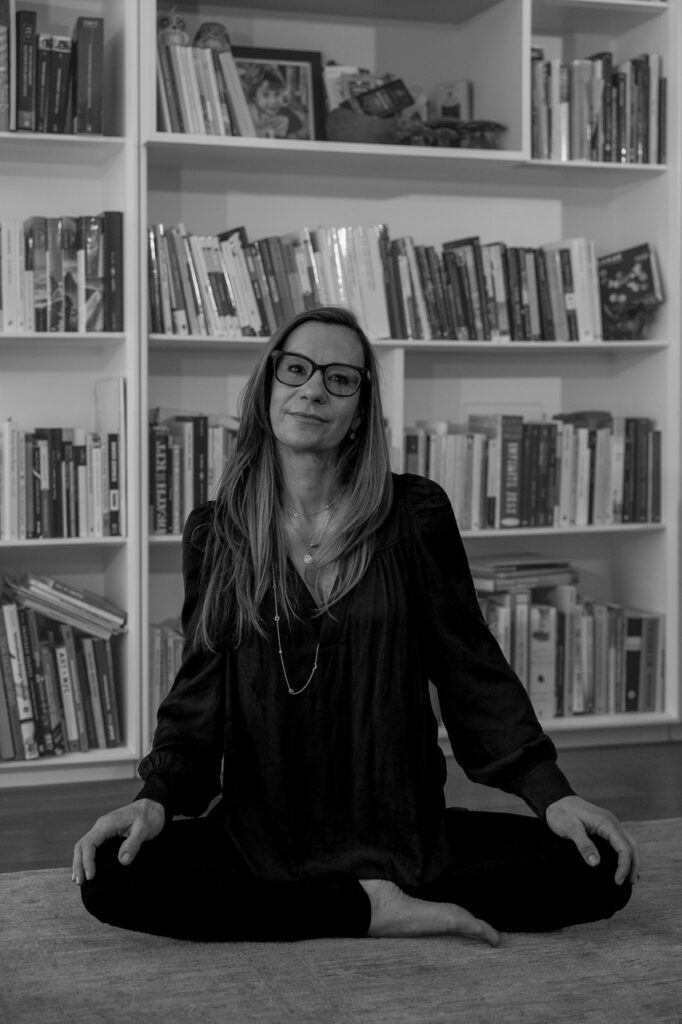
Keila Vall de la Ville: This novel was born years ago. It is a story I always knew I would write one day. It grew out of the imprint that peripheral vision leaves on me, out of my interest and preoccupation with human diversity, and from my relationship with the body and with stillness, as well as by my attraction to silence and contemplation —something shaped by my experience as a rock climber and a yogini. It also comes from my experience as a Venezuelan immigrant in the United States.
Yet, I think that today, when people’s right to be different and to seek their own identity is increasingly questioned—when being an immigrant has become so risky, when speaking a foreign language can make you vulnerable, when free and democratic thought seems to slip farther from our reach each day—stories like Minerva’s matter more than ever.
Much of my childhood unfolded in my maternal grandparents’ house in Caracas, among seamstresses. My grandmother sewed, and my great-uncle, a gay fashion designer based in New York, would sometimes visit and work from there. Whenever he arrived, he would set up a haute couture workshop right in my grandmother’s dining room. Mannequins, sewing machines, and seamstresses would take over the space, which quickly became glamorous and transformed the rhythm of family life for months.
My uncle lived a cosmopolitan life devoted to the pursuit of beauty. He was a man who moved with effortless grace, a fallen angel with punk flair. Sometimes he wore white linen and the most delicate sandals; other times leather in the boldest sadomasochistic style. On festive nights he would cross-dress in long satin gowns. I followed him everywhere, observing him closely with the curiosity and freedom that belong only to childhood. My first official job was gluing feathers, bugle beads, and sequins onto his satin shoes, corsets, dresses, and lengths of tulle.
But I also grew up surrounded by other forms of otherness. One set of grandparents was Catalan. They met, fell in love, and married as exiles in Paris during the Spanish Civil War. After the Second World War, a friend who could no longer travel for health reasons gave them the ship tickets he had purchased for himself and his wife. Those tickets eventually carried my grandparents to Venezuela. My other grandparents were Polish. They fled the Netherlands just before the Holocaust. They believed they were sailing to Ecuador, but disembarked in Venezuela by chance instead.
My mother is a filmmaker and my father a screenwriter. I grew up surrounded by marvelous and diverse people, creators driven by art and the pursuit of beauty. I spent days on film sets and in editing rooms, listening to conversations about plots, the small details of a writer’s life, and the rhythms of creation.
I also grew up in close contact with diversity thanks to my country’s openness to immigrants—Spaniards, Portuguese, Argentinians, Chileans, Colombians—many of whom arrived fleeing their own national tragedies. I come from a country that has been deeply wounded, a country that became violent, one that pushes dissenters away. I have always struggled with authoritarianism and its mechanisms of control. Because I believe in freedom, my instinct is to rebel against it.
Today I live as an immigrant in the United States. That, too, is a kind of periphery. I move between cultures and languages, constantly translating my thoughts, my words, and my writing—perhaps not by chance, I have also become a translator. New York is my home. I belong to it, even if it does not entirely belong to me.
Minerva grew out of all these references. I’ve come to believe that you only truly see what is there when you step outside the frame—when you look from the margins, even while staying connected to what you observe. Minerva’s story is not my story, though it comes very close. Over time we have become friends, and we understand each other quite well.
That makes so much sense. The details in this book—the way you approach the fabrics and the clothes, the things Minerva finds in the pockets of her family’s clothing, and, of course, the way Minerva, who’s a classically trained dancer, moves her body—are all so specific. I know movement and bodies are extremely important in your work. In your previous novel, The Animal Days, Julia is a climber and an extreme hiker. Here, Minerva is a dancer that supplements her meager income as a nude model for painters. Can you talk about women’s bodies as a theme in your work, and how you approach writing specific physical activities (like dance, or climbing)?
I think there are three movements, so to speak –since we are talking about the way the human body exists in the world and about my characters, who are themselves in constant visible and invisible motion– that run, or dance, through my work.
One has to do with the certainty that we are not the body—that we are more than the body, that we are a consciousness that even surpasses the cerebral—and at the same time with the fact that without the body we are nothing. This container that holds us, through which we identify ourselves, and that situates us in the world—in relation to it and to other bodies different from our own—is not only fundamental as a vessel; it is also a source of knowledge. Today we know that it holds memories, traumas, certainties, and tendencies. The body is far more mysterious than was once believed.
As a professional climber in my early years, as a yoga practitioner, as a hiker today, and as an explorer of and through the body, I am deeply interested in this duality—even this contradiction: how is it possible that we are not the body, and yet it contains the ideas we have about ourselves, even our history, all at once? To make the matter even more fascinating, deep meditation can allow one to separate from the body and observe it—and oneself—as a receptacle, from the outside. My writing returns again and again to the physical, mental, and spiritual dimensions of identity.
The second movement has to do with the small and the apparently unimportant, with the diverse quality of humanity, with those living at the margins—the minorities and the ways they seek to negotiate power under hegemonic forces. Most of my characters are women, children, outliers, dissidents, secondary figures, gender-nonconforming communities. I am particularly interested in how historically women have lived in their bodies from a peripheral position, under powers that have dictated —and still try to dictate—our destinies through a politics of fear and pain meant to keep us in place. In many countries around the world, femicides remain among the leading causes of death for women. Violence against us is often justified, overlooked, or easily forgotten, treated as less urgent, less important, than other harms. Why is that? I am fascinated by human nature, by the complex, contradictory, astonishing ways we exist, struggle, and relate to one another in the world.
The third movement has to do with the relationship between place and memory. My characters usually move within themselves, with their bodies, and through their bodies. They climb walls, hike mountains, dance alone and in theaters, travel the world, run for pleasure and sometimes for their lives, hide from danger, from love and from pain, search for people, board trains, take airplanes, sail along Amazonian rivers, cross borders. They remember things, they travel in time—because memory is also a form of traveling. They are always moving, and in the meantime, they learn who they are, they question the world, they tell a story.
I believe that place marks us. The landscape shapes much of who we are and how we see the world. A place is never only a place, it is also a form of identity. We give places meaning – intimately, culturally, historically. When Minerva poses for artists, she is physically still and yet, traveling in time—to her childhood, to her home and her queer family, and to her first questions regarding her own identity. When Julia, from The Animal Days, travels across the world in search of Rafael, she reflects on gender violence, love, and freedom. She is in motion, but she is not free, not entirely. All my characters draw something from their displacement in space and time.
The body exceeds the body itself. This interests me, and this is what I write about. My characters move, reflect on that movement and on their own identities, they love and suffer and connect with others through their bodies, and also move in the world, geographically. They are explorers, travelers, immigrants. They push against boundaries and borders.
When I write, I try to describe my characters’ movements, techniques, and sensations, with as much precision as possible. I close my eyes and picture myself doing what they are doing, feeling what they feel. I try to inhabit their bodies and register the experience in my muscles, in my pain, in my skin. I have not done all the things they do, fortunately for them—and in some cases, for me as well. I have experienced some of the things I write about, while others remain more a question than a certainty, and perhaps will remain so. I am not a ballerina, I haven’t experienced an ayahuasca journey, and I have never punched anyone in the eye. Still, I rely on muscular memory and on my knowledge of anatomy and movement, of how we hold and release tension, for example, imagining myself there first, and only then writing what they are doing. And if it is not entirely accurate, that is fine. I am, after all, a writer of fiction.
The other form of movement that captivated me in this book was actually its structure: somewhat loose, raw and intuitive (at least it felt like that), often lyrical and poetic, maybe even improvisational? Some chapters are long, others are just a handful of words, and we travel forwards and backwards in time. It felt like its own kind of contemporary dance piece. How much “choreography” did you decide on before you were writing, or was it just the way it came out? Also, what was the process of editing the book like? The novel feels so personal that it seems almost blasphemous to consider that other hands touched the material…
When I am writing and editing, I breathe a lot. I imagine the situation I’m constructing or describing. I imagine the rhythm that situation would have in the character’s life, the quality of that breath, and try to express it however I can. Sometimes it comes through words; sometimes through silence. Silence might be a blank line or two, a one-line chapter. This comes, I believe, from my experience as a reader and as a writer of poetry. It also comes from yoga, and self-observation. An inhalation is expansive, an exhalation contractive. How does the mind behave when we feel in a certain way? What does our body do? What do we contract? What do we expand? Where are feelings felt? All good questions for me when I am writing. In Minerva’s case this was even more important because she is a dancer who has meditated intuitively since childhood, and because, as a model for artists, she must spend long minutes completely still, she lives between movement and stillness, music and silence. As an immigrant—and as a New Yorker—she is always moving, mentally and geographically, trying to find a place for herself in the world, while at the same time loving solitude. She comes from a family and a home filled with objects and accessories, but her apartment in Morningside has very little, mostly blank walls. She wants it that way.
It was in looking to portray this relationship to movement and stillness, to music and silence, to travel and settlement, that I structured the novel in such an untraditional way.The human brain doesn’t work linearly. I feel that we live in different temporalities at once. We are who we were and who we will be, now. Memories mix with present actions and future planning. Our upbringing influences the way we relate to people, interpret the world and move in it. This fragmented, simultaneous vision, is the reason why the novel is not linear, and mostly fragmented. In a way, we get to know Minerva as she also gets to know herself.
I did not choose the length, the form, or the arrangement of the chapters beforehand. The novel asked for this type of narrative and I gave it to her. What I did have to do was revise the order of many chapters once the story was ready, once the novel was finished, in order to make sure that I wasn’t leaving anything out, or that the reader wouldn’t get lost in Minerva’s world. For a moment I panicked, I thought I might have to revise the order of many chapters to make it more linear. At that point I had the help of a kind and brilliant editor, Lucía Heredia, from Editorial Pre-Textos, who read it and reassured me that there was nothing much to change besides my initial movement. Her company and perspective were invaluable. I live my life rather intimately, as a writer, editor and translator that works from home, and as a New Yorker that, oddly, doesn’t go out much. However, a writer, as much as writes alone and spends a lot of time in their head, is never totally alone. There’s a tradition: the classic and contemporary authors they read and follow, friends they share ideas with, their readers, and if they are fortunate enough, editors and translators who at one moment or the other give them ideas, support, and critique. However, yes, this novel is very personal. As any novel should be, I think.
Like Minerva in the book, you occupy different identities. You’re Venezuelan, you are an immigrant; I’m sure you also consider yourself a New Yorker, since you’ve been there for such a long time. Can you talk about what it feels like to be a Venezuelan writer right now, writing from diaspora? And has it felt different to be a Venezuelan writer since the events in January, when Donald Trump ordered an incursion in Venezuela that removed dictator Nicolás Maduro from power?
Foreignness is inseparable from my literary work. I have written almost all of my books in dialogue with voices, authors, and influences I would never have encountered had I remained in Venezuela. These encounters were inseparable from my academic experiences, from bilingualism, and from the ongoing reconfiguration of my identity as I discovered connections with Latinx and other American voices in the United States. All of this shaped not only my literary imagination but the very way I inhabit language, conceive of belonging and move through the world as a writer and as a person.
However, I come from a family of travelers. My parents preferred movement over settling. Traveling was a priority. As an anthropologist and a professional rock climber, I also moved constantly and lived among people from many parts of the world under some of the harshest—and most improbable—conditions. Those encounters and experiences, the feeling of aliveness in the face of the unexpected, the notion of boundless possibility, and the instability and difficulties that come with it, remain in my work.
If I think about it, only my first book of short stories, Ana no duerme, was written in Venezuela. I completed the next two works in the United States —the novel Los días animales and the poetry collection Viaje legado– and since then I have published six more: in the United States, two collections of short stories, Ana no duerme y otros cuentos and Enero es el mes más largo, the translation of Los días animales: The Animal Days, and a chronicle book, El día en que Corre Lola Corre dejó sin aire a Murakami. In Spain, I have published the original version of Minerva, and the poetry collection Perseo en Si bemol. Last year I finished a new novel, still unpublished. Almost all my work has been produced as an immigrant.
My characters speak in a spectrum of tongues: Venezuelan, Mexican, Colombian, and peninsular Spanish, Spanglish, and even a touch of Warekena. Their stories, their uprootedness, and their rhythm are inseparable from a certain sensation of displacement, from the notion of human diversity, and from a search for freedom. Their multiplicity reflects my own journey, turned and refracted like a kaleidoscope, and speaks to the woman I have been and the writer I am today. My characters are always searching for something—or someone. They challenge the established order and question their own identities. They are often on the margins. They fall in love on the subway just before boarding a plane to search for petroglyphs in the Amazon. They undress in SoHo art studios before dancing in the city’s theaters. They climb in Kathmandu. The protagonists of the book I’m currently writing live in a place that does not exist, though its conditions resemble those of many countries in crisis today—countries we read about daily in the news. It is a story about bravery, creativity, resilience, and determined love. I don’t know what my literary work would be if I were still in Venezuela. I only know it would be different—I would be different.
I moved to New York City in 2011 seeking a truce from the political crisis, from polarization, from a violent, insecure, and increasingly controlling climate that had become unbearable. In the midst of deep discouragement and fear, I sought protection for my family and for myself. Democratic institutions and norms were dismantled,and the political-military establishment wielded not only reactionary rhetoric but real, tangible violence. Venezuelan society felt profoundly fractured.
But I carried another ambition too: to live among writers from different places, to situate myself within a larger literary universe. To learn from other cultures and literary references, to explore, to open up my world and see whether my work could survive the leap. I applied to a two-year MFA program in Creative Writing at NYU. I would study, my children would learn English, and once my books were finished, we would return to Venezuela. Far from that, the situation back home continued to deteriorate. I slowly began to settle in, and an MA in Hispanic Cultural Studies from Columbia University followed. Little by little I became a Venezuelan–New Yorker.
For more than twenty years, Venezuelans have lived immersed in fear: fear of speaking, of dissenting; fear of acting and of remaining silent; fear of losing employment for political reasons. Darkness, thirst, and hunger have been used as instruments of coercion. We have lived under the weight of violence and before institutions that left us vulnerable. Thousands have ended up in prison. More than eight million have left the country, forming one of the largest diasporas in the world today. Now we face a contradictory landscape: on one side, a horizon of freedom; on the other, entrenched bleakness and uncertainty. To implement a transition aimed at restoring our democracy, it is essential to recover trust in institutions and reestablish the separation of powers, pursue a transparent electoral path, and bring authoritarianism to an end. It is also necessary to ensure that any external tutelage gives way to political and economic autonomy under the rule of international law.
All of this seeps into literature. Yet I don’t see Venezuela’s recent history as an inescapable theme. We are in a moment of uncertainty. But I don’t think it defines my work. I don’t feel the label “writer of the Venezuelan diaspora” defines it. It informs part of who I am and what I write about, certainly. I know what living in fear and in constant suspense feels like. I also have experienced what it means to change your own life to protect the people you love and begin again. But my work is shaped by other forces as well, being a woman, a mother and a partner, a traveler, an anthropologist, a rock climber and a yogini, an immigrant living between languages, moving among cultures and references, in a city marked by diversity. I leave that kind of reading to academics, that approach, the categorization and the critique. In a writer’s work, traces of biography inevitably emerge; our raw material often comes from personal experience. But that’s only part of the story. For me, what I seek lies beyond that: stories that anyone can relate to, that are universal and alive – stories that act as metaphors for something else. I think this is one of the marvelous things about being a writer.
Alejandro Puyana moved to the United States from Venezuela at the age of twenty-six. In 2022, he completed his MFA at the Michener Center for Writers at the University of Texas. His debut novel, “Freedom Is a Feast,” won the Westport Prize for Literature. His work has appeared in Tin House, American Short Fiction, The Southern Review, SwampPink, among others, and his story “The Hands of Dirty Children” was selected for Best American Short Stories 2020.
This post may contain affiliate links.