


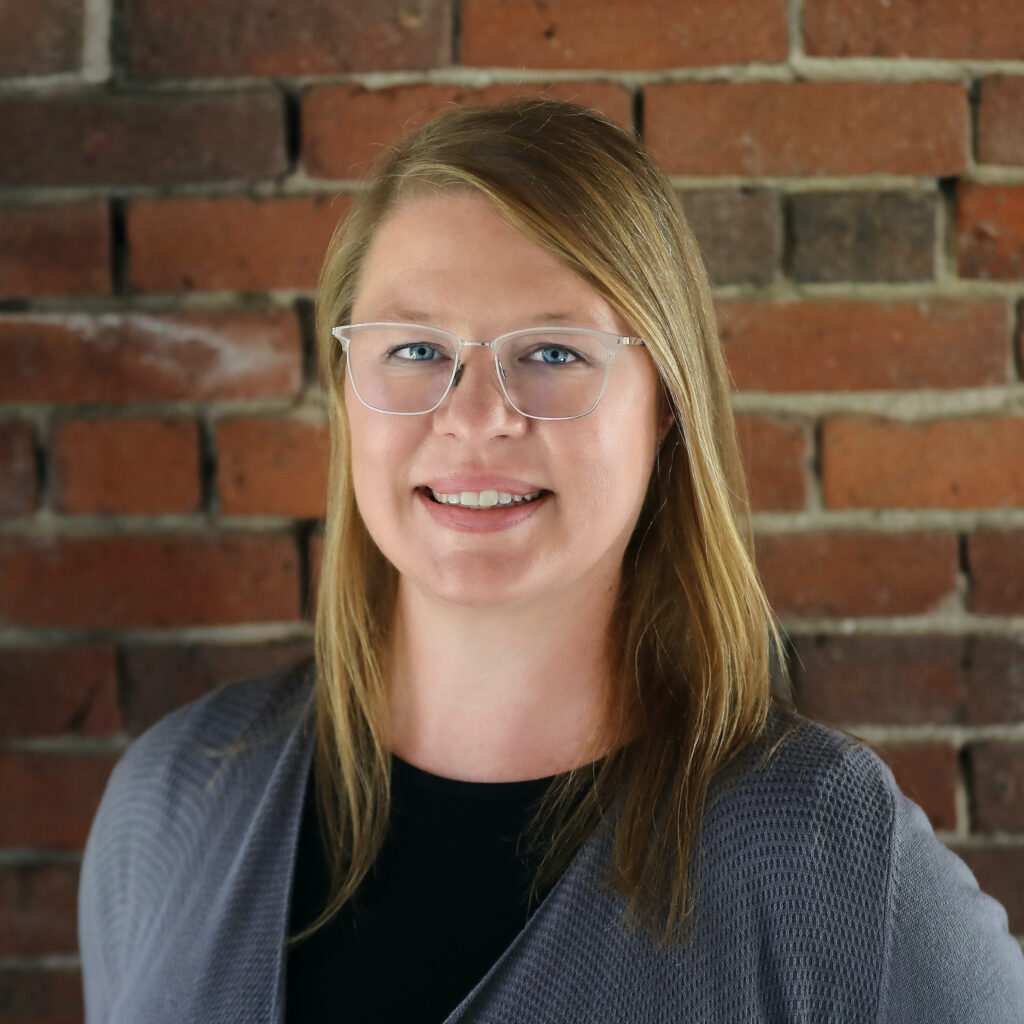
To many readers and writers, Wendy J. Fox is a tireless champion of small presses and authors. Her regular, seasonal round ups at Electric Literature (“15 Small Press Books You Don’t Want to Miss”) are a vital lifeline for those of us who seek to find literature beyond the mainstream. But she’s also a glittering prose stylist in her own right, with five works of fiction to her credit. Her third novel, The Last Supper, follows a stay-at-home Mom of two young children. On her 40th birthday, Amanda launches (awkwardly) a lifestyle brand she hopes will reinvigorate her flagging life, while positively influencing Moms everywhere. But with her marriage disintegrating and her friendships falling apart, Amanda discovers there’s far more to success than acquiring likes and followers on social media.
I recently spoke with Wendy about her latest novel, the difficulties of being a wife and mother in modern America, and the importance of intentionality in maintaining human connection.
K.E Semmel: In The Last Supper, Amanda’s a mom who’s just turned 40. She’s trying to find a space for herself outside of wife-and motherhood as a social media influencer, despite the fact that she has a negligible online presence. In this she’s a kind of everywoman, trying to make a home function while having a life outside of it. Amanda wants to develop her brand (“Amandatory”) for women like her. What does it say about the state of modern American motherhood that Amanda’s brand is a virtual platform, “what [women] turn to when [they] are completely out of fucks” to give?
Wendy J. Fox: What I was trying to get at with Amanda’s effort at becoming a momfluencer is just the sheer impossibility of doing more than one or two things well.
I think back to years ago when I was about two years into a high-level job, and my husband and I had just moved into a new-to-us house, which came with all the new house problems people are familiar with (if one is lucky enough to purchase a home, very much #privilegeproblems): broken appliances missed by the inspector, random plumbing issues, the gas fireplace not firing. I lived within walking distance of my job, and my husband traveled for his job (this was pre-pandemic) close to 80% of the time. He was basically never home on weekdays. Great setup for me, as a writer with a dayjob, in terms of having a lot of space and time after my dayjob to work on my writing, but my employer was becoming increasingly annoyed by me leaving work to meet repair people.
Finally, I said to my boss, when he was complaining again that I was not at my desk: You have a wife who does all this for you!
I don’t have children, but I could see in that moment, as well as many others, how flexibility in employment benefits everyone, but especially benefits those of us carrying the emotional or administrative load, which is largely women, and double (triple? quadrupole?) for mothers. It’s so tiring to both have to do the work and then also, weirdly, have to then defend how you’re using your time.
I’m struck by the novel’s setting. I don’t recall a single detail that could pin the location to a specific place, though the setting is distinctly American, a kind of Anywhere, USA. This is surely a conscious decision. To you in your fiction, what role does a story’s setting play?
Anywhere, USA is exactly correct. My other books have had such a grounding in place, I think it would be completely fair to identify the settings in past works as a full character. The setting of The Last Supper is not geographically identifiable on a map, but the landscape is the suburban single-family home where Amanda and her family reside. Which, again, could be in nearly any mid-sized city in the continental US.
Setting always matters to me, and in this case, the confines of the home have largely become Amanda’s world. She goes outdoors, but that means the backyard. She has little connection with the larger natural world. She, like many of us, has lost (or never had) the feeling that exists in the body when we are in tall old stands of trees, in a muddy creek bed, or seeing water flash through an arroyo. The disconnection with the environment is in parallel with the distance that exists in her marriage and with some of her friends.
For people who are native urbanites or even suburbanites, I’m not sure how much the concept of no grounding in forests and fields and lakes actually tracks, but for me personally, it’s emblematic of part of why a novel with no identifiable setting can actually track.
I’ve lived in Washington state, Colorado, and am currently residing in Arizona, so I’ve had northwest, mountain west, and southwest experiences. That’s meant cities, like downtown Denver or Seattle, it’s meant rural like Okanogan (WA) or Pinal (AZ) counties. The point here is that I have a feeling of loss for people/characters like Amanda who don’t/can’t connect with what’s going on in exterior worlds, whether that is the sizzle of a city or the hush of the rural.
How did the process of crafting this novel differ from What if We Were Somewhere Else and If the Ice Had Held? How have you grown as a writer from book to book?
That’s such an interesting question, because the genesis—and the process—feels so individualized to each book.
For example, and I have shared this before: what became If the Ice Had Held (2019) was a manuscript that I drafted over a course of a year, with the goal of writing 150 words a day. That’s right around 55K words over 365 days. It was, obviously, extremely fragmented and took me three years to revise into a manuscript I would even show to anyone, much less shop. That’s when I was working the job that sometimes harassed me about having to go home to open the door for a repair person.
150 words a day was what I could do then, and it felt important to do it, even if I was squeezing out 48 or whatever words waiting in line at a sandwich place. It was actually a real comfort to me to have a book-length manuscript to revise.
For What If We Were Somewhere Else (2021), I was still working that same job, but I’d learned to manage it better. I’d also started to really think about what it would mean to leave tech work. I was conflicted, because for all of the very many (and often very justified) criticisms of the tech industry, working in tech helped me, as a first-generation college student, pay my student loans, buy my first home, and discharge a not insignificant amount of credit card and medical debt. I was in this weird place of realizing I had become a person of privilege because of late-stage capitalism while also being completely grossed out by the whole concept. The characters in that collection also grapple with work identities and what it means to have one’s life intersect with a certain kind of economy.
By the time I was working on The Last Supper in earnest, I was only contracting in tech, so dayjobbing was absorbing fewer of my hours. People in my life would ask me if I was writing so much more. I was not! I was writing somewhat more: the change was having stretches of hours for deeper writing time. Also, after leaving full-time tech work, I am not ashamed to say I sleep a lot more.
You create vivid characters using what seems simple brushstrokes. Amanda’s significant other Kyle, for example, is an inattentive husband and father who fades out by novel’s end. His disappearance aligns perfectly with his absentness throughout the book. The same is true with two important women in Amanda’s life, Dani and Jess. Even though they share what appears to be a stronger bond, by the end of the novel they’ve drifted away from her. Can you describe your process of character building? In particular how your characters contribute (even in their absence) to Amanda’s story?
In the mid-2000s, I had a lovely co-worker named Stu who once told me that it wasn’t turning 40 or 50 or 60 that was the kicker; instead, it was turning 41, 51, 61. As Stu put it, “that’s how you know this shit is permanent.”
All of the characters are viewed through Amanda’s lens. She’s in the wake of having a milestone birthday, but she’s also in that time of life where so many things are like the beginning of that Jonathan Galassi poem:
He was middle-aged which
means that the mixture of
death and life in him was
still undetermined.
This is a space for so many people where marriages are becoming first marriages, where friendships experience separation because everyone is too busy, and the absence that you rightly point out is part of the everyday texture of life in relationship to people who maybe we once couldn’t go a week without seeing. Then it becomes a year, and then another year, and that’s how you know, in the words of Stu, it is permanent (or maybe, impermanent?).
In building those characters, who are close and then remote, I was trying to capture something I feel very acutely in modern life, which is: if we don’t work intentionally at keeping connections and keeping people close, there is a drift. It’s often no one’s fault. We all have those childhood or college friends we think fondly of, who once meant everything, but because of being too busy or distracted or phone addicted start to fall away, and then one is sending an Instagram reel instead of calling or making a coffee date.
With Amanda’s husband, Kyle, it’s a different drift since they see one another daily, but even physical proximity does not guarantee that people won’t start to pull apart.
One of the many things I admire about The Last Supper is the unflinching way the novel depicts the dissolution of a marriage. To acquaint readers with what they’re about to read, what similar titles (or films) inspired you while you wrote the book?
I think of books like Life Span by Molly Giles (a memoir) that has a similar structure and takes up questions about economic agency, or Half Lives (stories) by Lynn Schmeidler in the way it elevates the banality of some elements of regular life into emotionally charged scenarios. Both of these books are different than The Last Supper, but each has an emotional texture that feels consistent with my novel.
On the daily, I am inspired by literature, but it’s often more about being wowed by how a writer handles the work. I recently read The Salvage byAnbara Salam, which also has a disintegrating relationship in it, but it’s really more of a gothic mystery. I wondered, reading it, how the author would pull together all of the threads, but she does.
To better answer your question, maybe: I’m deeply interested in the way that we often don’t communicate how we really feel, and this is represented across genre, medium, and regularly in our own lives. A lot of the interactions between the characters are really awkward.
You capture that awkwardness really well in this novel. Around a third of the way in, I started to feel a compelling sense of claustrophobia, as though Amanda’s life was bending toward the woman’s in “The Yellow Wallpaper.” In this way, the novel could almost be interpreted as a modern turn on that classic short story. I’m not saying this is your intention here, but I’m curious to know: As a writer, how consciously do you employ elements of your reading into your work?
The other day I was listening to Morning Edition on NPR with Scott Simon interviewing Jonathan Miles about his new novel, “Eradication.” Simon asked Miles if he had intended to reference William Golding and Ernest Hemingway. I appreciated Miles’s answer: “Intended is a funny word for a novelist, right? I think that everything that a novelist or really any artist reads or hears somehow gets metabolized into what we make…”
I don’t consciously employ elements of my own reading into my own work, but I do think “metabolize” is the correct way to think about it.
Everything we read becomes part of our own personal zeitgeist, and that goes for all media consumption.
Here’s a thing: In January, I was traveling with one of my best girlfriends in Central America and she brought along Wuthering Heights to read. I was reading my small press weirdo book staples. It worked out that we have just seen one other again, even though we have geographic distance and all the life stuff between us.
She put her salt-stained paperback of Wuthering Heights on my kitchen table, telling me I need to read it again so we can really talk about it.
(I should actually ask her to read “The Yellow Wallpaper,” which was an early example for me of how much can happen in a short story.)
But isn’t that the whole point? Whether it’s a book or story from 1847 or 1997 or a 2027 forthcomer? To talk about it with a friend? To have some intersection of the personal zeitgeists? To engage with literature in confluence with the people we care about?
I have my own practice, but as a reader and a writer, all I really want is community.
K.E. Semmel is a writer and translator of more than a dozen novels from Danish, including Naja Marie Aidt, Jussi Adler Olsen, and Simon Fruelund. His fiction and nonfiction have appeared in Ontario Review, Lithub, The Millions, HuffPost, Electric Literature, The Writer’s Chronicle, AARP online, Washington Post, and elsewhere. He is the author of the novel The Book of Losman (2024). Find him online at kesemmel.com and on Substack at Bright Boy: A Tourette’s Life.
This post may contain affiliate links.