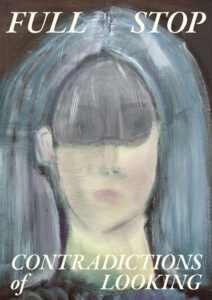



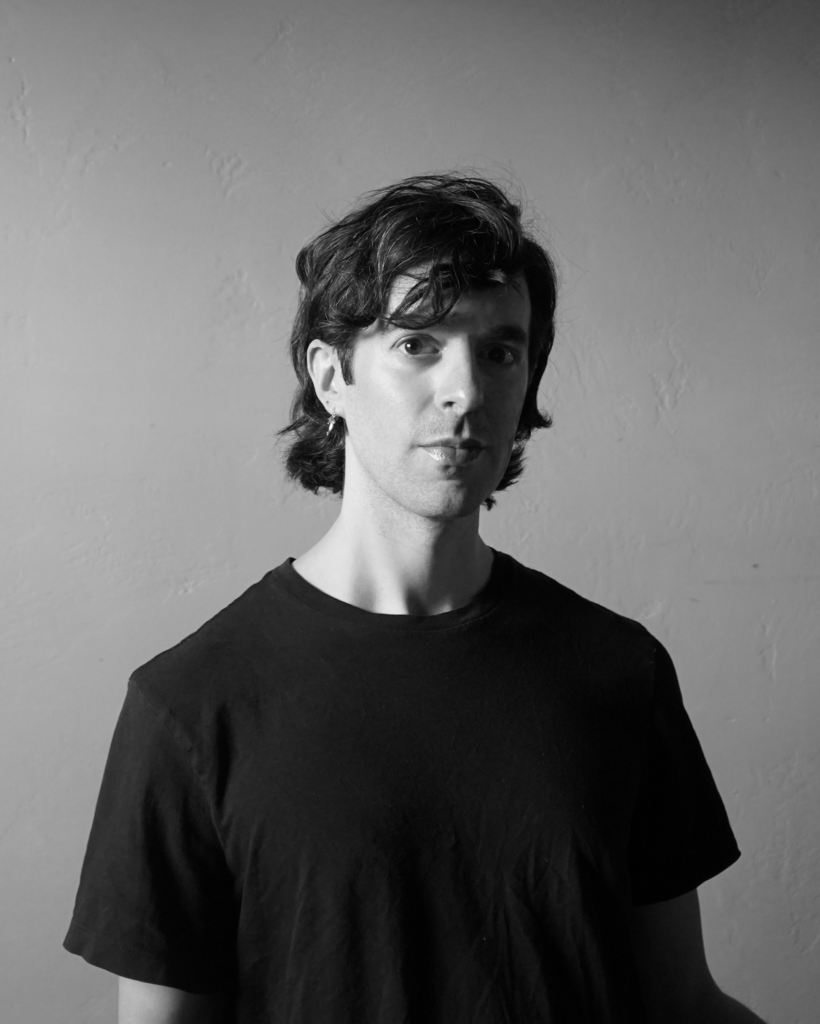
I first met the poet Jake Rose in a small town in California. We were two graduate students, stumbling into poetry and academia. Although we only overlapped a year, I had the blessed opportunity to hear Jake read. Inside of an independent bookstore, Jake pulled out what I believe to be a hand-bound notebook (for he is the type of poet to write handwritten poetry in hand-bound notebooks) and read a short series of poems about Joan of Arc. And for half a decade, I have remembered those poems.
So when I got the (once again, blessed) opportunity to read an advance copy of Jake’s award-winning book JOAN, I sunk my teeth into it, eager to devour the language that had for so long been living only in my memory.
JOAN is a book of poems. When I say that, I mean JOAN is a book that revels in the strangeness of poetry, the resistance of poetry, the very liminal quality of what makes poetry feel like Poetry. It is also a well-researched and historical collage/collapse of Joan of Arc the figure and Jake Rose the poet. Filled with heartbreak and landscape and tenderness and fear, JOAN tells the story of a speaker “[waiting] to be plucked / out of gender and situation,” and reveals over and over again how desire and identity fail to be understood.
Jake and I conversed via email about queerness, about Joan herself, about the inadequacies of language—all of which appear in this mystical, visionary work.
Saba Keramati: Thank you so much for allowing me to read JOAN. It is marvelous. There’s much to discuss, and I’m eager to get to it all but I want to start with some broader questions about your book and process.
It feels impossible for me to think of Joan, the figure, without thinking of queerness. (Although this could be the result of my interests and biased media consumption.) Nevertheless, Joan has been widely studied, interpreted, and imagined as a queer icon.
What drew you to the figure of Joan of Arc? Did you set out with the intention of writing a book of persona poetry? And do you expect, or hope, your readers to have an understanding of Joan as a queer(ed) historical figure?
Jake Rose: Hi Saba <3. Truthfully, I was reading a book by the poet Angelo Micah Olin, who had written a line referencing a lyric by The Smiths, “and now I know how Joan of Arc felt as flames rose to her Roman nose and her Walkman began to melt.” I immediately thought: how could someone ever know how Joan of Arc felt? She was always taught to us in school as a kind of mythological character or fairy tale.
It took a long time for me to think about why this person felt so close to me. There are a few small parallels between our lives. We both grew up in rural areas, in religious families, with similar chores, and perhaps even similar paces of life. And as you note, Joan has long been read within queer scholarship as a figure who destabilized gender norms through her clothing and authority. My own life doesn’t mirror that history, of course. I don’t think my dressing in women’s clothing privately as an adolescent led to any comparable disruption, but we both had secrets to keep. And we both held a faith that eventually came into conflict with the structures surrounding us.
I think of Joan’s queerness in relation to an observation by the historian Karen Sullivan, reflecting on the trial transcripts: “Her speech, like her character, contained within it elements from various populations, both aristocratic and plebian, both masculine and feminine, and both sacred and secular, but in its combination of all these elements it remained anomalous to all of them.” Joan, to me, is queer in all the ways that have been widely studied, but also at the level of syntax, inescapably and fundamentally, through this insistent plurality. Ultimately the book became much less persona, and some combination of biography and autobiography. Writing with Joan and not through Joan, if that makes sense. It became a process of learning something about myself I didn’t know I was looking for.
So in a way, Joan was your divine guidance. It’s funny—while reading this book I felt akin to Joan. I was being led by a voice, a Speaker, one I trusted to follow through sprawling landscapes and winding sentences.
I am curious about the notion of queering syntax, and how it might relate to the distinct lack of punctuation in this text. Can you speak to that formal choice?
I’m so happy to hear that! I think if I had any goal in writing the book, it’s that a reader might have just that experience, a feeling of closeness. I looked at the lack of punctuation as a choice to let the text remain open to multiple readings and refuse closure. I wanted to decenter the author’s presence, removing as many signs of intervention as possible. I was thinking about Katie Peterson’s description of Emily Dickinson’s untitled poems as “ungovernable text, without operating instructions,” and how far that idea could extend in JOAN, where the poems are similarly untitled. It felt like how I read Joan’s queerness: porous, making room for ambivalence and change. I also wanted the poems to be able to move forward quickly, even if it risked the legibility that punctuation would have provided.
That sounds like something Katie would say. Ungovernable is certainly a good word for JOAN. And Joan.
There is a bravery in this book. I may go so far to call it a resistance to knowing. Nothing is over explained; the precision of the adjectives in conjunction with the openness of form create a somewhat lawless poetics that bring the reader directly into the speaker’s state of mind.
What does it mean for a book of poetry, a poet, Poetry itself, to resist clarity and definition?
Working on this book made me think much more about these ideas of clarity, resistance, and definition. I started to think my way towards a connection between clarity and legibility, first. Reading the trial transcripts, it became clear that Joan answered questions directly, yet the court repeatedly asked the same questions again and again in hopes of getting different answers. The issue wasn’t that she was unclear, but that her responses didn’t register within the court’s framework. Her language was very precise, but it was illegible to the dominant forms of theology.
That distinction stayed with me as I was writing and revising. It helped me think about how poetry can be exact without making itself available to the structures of power that demand explanation or submission from us in various ways. That capacity, to communicate while exceeding or disrupting the terms that would contain speech, is something I recognize in the poets I return to, and something I was trying to work through in the book.
One thing I really admire about JOAN is its commitment to setting. Place and Time converge on this narrative journey.
Can you speak to the significance of place in this collection? Specifically, how did you come to sequence this collection around Joan’s physical journey?
We talked earlier about how knowledge or knowing is represented in poems, and I find my poetics even more interested in situatedness than knowledge, and that’s why place became so important in the book as an organizing principle. Or like an active interlocutor and a site of convergence. Place is so primary to me because I see it as coextensive with our bodies. Again, this is a leftover from a childhood spent in fields, gullies, rivers, estuaries. I’m thinking of course of Agnes Varda saying “If we’d open people up, we’d find landscapes.” And through drafting, sometimes I did wonder, is this just a book about variations of light? Is it just a book about bodies of water? But I like those questions. Any questions that recenter the more-than-human world.
When I thought about sequencing the book, and dividing it into chronological chapters, it was a way of introducing formal restraint, and one way the book could show a real fidelity to the historical Joan, which felt important if the work was going to exist within an historical framework at all. The linear model of time also began to give the book a forward motion where pressure accumulated.
Would you consider JOAN a multimedia text?
I feel very acutely the inadequacies of language, especially in writing the lyric. Which is not to say I think language itself is inadequate. Alice Notley has a line I always think about: “Now I have to improve this poem by making it longer and a mess.” For me, though, that mess sometimes spills out of language and into other forms entirely.
Before I was a poet, I was an artist, and those practices never left when I started writing. I tend to think of each book as a project, imagining how it might exist as an installation, game, or a material object, and then asking if any of those ideas can appear on the page, especially at points of inflection. How can the reader be asked to participate in the creation process? In JOAN, the images and fragments were also a way to expand formally on the way in which the historical Joan’s speech was so constrained and mediated by the structures of interrogation.
We keep talking about history.
I often find myself suspicious of works that are marketed as “timely” or especially “relevant” to the current moment.
But we have, of course, in JOAN this “pitiful state of France” (a phrase I just love, by the way) and it is difficult not to place oneself in that pity.
There’s a convergence of history, of time, the same way there is a convergence of Joan and speaker.
How has writing this book—living it, really— affected your politic?
Spending time with Joan’s trial made certain things hard to ignore. She is detained first and charged later, denied counsel, questioned by partisan judges, some under direct financial influence, held in a military prison rather than an ecclesiastical one, and coerced through the threat of violence. It all sounded so familiar. We still use courts and legal language to launder violence into something meant to appear neutral.
Because of that, it’s impossible not to think about contemporary systems that operate through similar frameworks, even in very different circumstances. At this moment, in ICE detentions throughout the country, people are taken from their homes or workplaces, held in facilities with documented abuse, often charged later, and frequently have no access to representation. Arrests are scaled to meet quotas, creating predetermined outcomes, and immigration status is conflated with criminality. The language has changed, as have the historical circumstances, but the logic has not. Poetry can’t fix this, but it can refuse to look away, and it can try to name what is happening.
Saba Keramati is a Chinese-Iranian writer from California. She is the author of Self-Mythology (University of Arkansas Press, 2024), selected by Patricia Smith for the Miller Williams Poetry Series. Her work appears or is forthcoming in Lit Hub, Kenyon Review, Yale Review, and other publications. She is the poetry editor for Sundog Lit and a board member of RAWI.
This post may contain affiliate links.