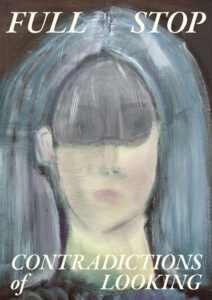



It’s a particularly important time to read about queer and trans love and my recently published Men I Hate is a book that was written somewhat in conversation and debate with my husband’s book, Becoming a Man. Here, we wanted to try interviewing one another.
Although Carl thought he was doing the best he could to prepare me for his gender transition, he didn’t know what he didn’t know. We had been together 20 years as a lesbian couple before Carl transitioned. I felt betrayed and blindsided when he transitioned. In Men I Hate I explore my fear that I will lose my identity following my husband’s transition and if it will be possible for me to love a man. We’re still together, still married, but the process was not uncomplicated and confusing for both of us. In this interview we talk about what is at the root of love, commitment, and identity.
Lynette D’Amico: Why don’t we start with the origin of our books. Did Becoming A Man begin as notes, journal entries, individual essays that evolved into chapters, research, something else altogether? What is the origin story of Becoming A Man?
P. Carl: I knew I wanted to write about transitioning as it was happening. I was becoming embodied at the age of fifty and I had never written with a body before. I knew it was controversial to write in the present tense but everything about my life was present tense. My process was to write essay-length accounts during the most vulnerable moments of my transition as I visibly shifted from being seen as a woman to living as a man. I took notes on Post-its, my phone, my hand, in an effort to remember what I felt and perceived simultaneously.
In your book, you take a close look at your own behavior to examine the ways in which you might be performing toxic masculinity. What do you think about the concept of toxic masculinity 10 years into your transition?
Having been a feminist scholar for more than half my life, becoming a man wasn’t something I saw coming years in advance. I had a polarized relationship to masculinity. I hated it and I loved it. I wanted to avoid men, and I wanted to be a man. I know in my body the dominant and dehumanizing reality of masculine power. Over the last decade I have come to believe that automatically attaching “toxic” to masculinity, though historically verifiable, is not particularly useful. When men feel they need to prove they are not toxic as a point of entry into dialogue, it often turns to confirmation rather than opportunity.
One theme your memoir explores is the contradictions of the trans body and trans experience—the multitudes and double-consciousnesses and parallelisms that one can contain. This could mean partially knowing the gender one was assigned before they knew they were transgender—or simultaneously feeling queer and not queer, straight or not straight. Why were these contradictions significant to your writing? Do you think spending five decades before you transitioned made you experience “doublings” on a more profound level?
It’s tempting to want to forget the past me, the one who was seen as a woman and treated a woman. But that experience, fifty years’ worth, was nothing if not an education on how a girl’s/woman’s consciousness is formed. I’ve also always felt like a boy and a man, actually I’ve felt like a cis man. I spent a lot of my adulthood in women-only spaces surrounded by queer women knowing I was queer but also not feeling queer enough in those spaces. Being a lesbian felt like a box to me but it also felt like me at times. I live in Rhode Island now and we moved here after my transition. For the first couple of years no one here knew I was a trans man and then I would take the train to Boston to teach and I was the only out trans faculty member that the queer kids gravitated to. I love being both of those people. They are different and the same.
There is a theme in both of our books of loving men and hating men. Can you say a little bit more about that from your perspective?
Well, this question comes at a time when the most toxic men known to humankind are running the country. To quote your book title with a qualifier added, I hate these men. And I hate them as men who revel in and define themselves by the superiority of their sex. I was raised by a man not unlike those men in certain ways. I feel a deep rage toward cruel misogynistic men that I can tap into with very little effort. On the other hand, I love hanging out with men. I have guy friends now in a way I didn’t before and when we go on some adventure together I feel like I imagine women might feel when no men are in the room. I feel at ease in male friendships and at ease in what some might consider male spaces. I hate men. I love men.
Trans writer Thomas Page McBee has qualified his wishes for a cis boyhood, “but once I saw how much of this toxic socialization happens for boys, and what a terrible trial boyhood appears to be, I found myself happy that, as an adult, I’m much closer to the qualities that we train boys to reject. … Realizing that boyhood would have meant being indoctrinated much earlier into these ideas really allowed me to let go of my grief and be grateful to my adult self for seeing what was going on and stopping it. It also gave me a lot of empathy for boys.” Do McBee’s words resonate for you? How do you feel about missing out on a cis boyhood?
I wish I had had the opportunity to live as a boy and be socialized as a boy and find myself and my identity inside a space where my body felt at home. McBee talks about the damage done to boys in the socialization process and I agree with him about that, it’s a crisis that we are living today. But the damage done to me being stuffed into a dress, a girl’s slumber party, my dad’s daughter—I don’t think that gave me some leg up on gender. There is what I believe to be a myth in trans male culture that smells of “male superiority” to me. It goes, “Because I was a girl and a woman once I am more wholly formed as a person.” I simply don’t believe that. I believe we are all differently formed as people and being trans is one of those ways. Some trans men may perceive gender from a perspective that can be helpful in better understanding the problems with our expectations of masculinity. But I don’t believe that to be some inherent trait of trans masculinity. I know as much about gender as the next person. That is what transitioning taught me. I don’t have a leg up, I just have a body in the game.
I have a pretty good idea, but give us the rundown of Men I Hate’s origin story?
I had always written essays, as a way to memorialize something, like 80s gay culture, or to ask myself questions about something such as what is our responsibility to our neighbors, to our community? Or how do we grieve the unbearable? What is left to us after an end, or the end? Sometimes I am writing in response to a heart text, a book or a story that I carry like a talisman. In the case of Men I Hate, the collection started with the first essay in the book “Changing the Story.” After the 2016 election, I couldn’t read anything except social media rants and opinion screeds. In the devasting wake of the first Trump presidency, I found it unbearable to be around men, to consider men, to try to parse out the good men from the bad. You were reading texts about variations in masculinity as you were exploring transitioning. At the time it seemed that every movie we were watching was a western or a war story. I just felt raw. The first book I could read after the election and during your transition was Austerlitz by W. G. Sebald. The idea as presented in Austerlitz that history can co-exist with the present, that history is not necessarily true but one version of a truth was comforting to me as I was considering what your transition might mean to my identity, as you were parsing your own personal history, and reality was being denied and redefined on our national stage, I felt like I was unraveling. Was I still gay? Were we still a lesbian couple? If not, then what were we? Were we anything anymore? So I started writing to address the questions I had.
What was the process like for you to sort out living as a lesbian being married to a man?
Initially, I thought it wouldn’t be that big a deal. You had gone through top surgery and a name change by this time, which we rolled through pretty much without a hitch. We loved one another, and we naively assumed that gender wasn’t gong to be the thing to break us apart. We knew nothing. The reality, for me anyway, was very different from my expectations. Everything changed. I didn’t know if we were going to make it. My lesbian lover was gone. You weren’t any kind of gender queer, you were a bourbon swilling, man-spreading, gym bro. I didn’t recognize you. The options available to me seemed to be to cut off men completely, or to try and cultivate a level of curiosity about the men around me at the time, including you. This was not a natural or intuitive process—I tend to live in absolutes and certainties–a kind of one-way thinking that if I had maintained could have closed doors between us. I don’t know if there was a process, more like time passing for me to grieve and then to discover what happens next. We’ve talked that six months into your transition, we both thought our marriage was over. And then it wasn’t.
You’ve titled the book Men I Hate but in reading the essays there is such generosity and understanding toward all the men, which makes me curious, why the title?
The early drafts of the individual essays, were all titled “Men I Hate.” I thought it would be provocative or at least funny to have a whole collection of pieces, exploring different aspects of men or masculinity, or individual men, or men collectively with the same title. But so many people were so anti the title, my writing group, writer friends; that it was too harsh, too off-putting, too in-your-face, which made me dig my heels in. I got the same feedback from a few agents I queried. The title was kind of a joke to myself. I so didn’t want to compromise on the title; the title is like starting a conversation by yelling. It’s meant to hook the attention of readers who might yell back, which I welcome. The book is so much more about love than hate, but how is it possible to love men? One of the great things about my publisher, Mad Creek Books, is they never suggested that I change the title. They loved the title.
You’ve been writing for a long time, with Men I Hate winning the Gournay Prize your work is getting seen in a bigger way. What’s it like to be coming into greater recognition of your voice at what some people would consider a later stage of life?
I think it’s so well-deserved! But seriously, I didn’t know what I was doing for so many years. I felt an almost compulsive need to write, but I was writing without feedback, without a community, without any kind of formal instruction, and writing was always secondary or third or fourth to making a living. Also, in all honesty, I wasn’t a good student. Where you thrived in academic settings, I shrank. I didn’t have mentors at the time to lead me to the promised land. You were the person who encouraged me to consider graduate school when I was in my 50s. We were on a dog walk in Chicago. We had just moved to Chicago, you had just started a new job, my mother had recently died… you asked me what I wanted to do next: another advertising gig or maybe… grad school? I thought I was too old, but I got into Warren Wilson Program for Writers, the best low res MFA program in the country, and never looked back.
Are there other memoirists, other writers, whose work has informed your approach to crafting your book? writers whose work you read long before you realized you were writing your own memoir as well as writers whose work extended invitations and permissions to you as you were writing Men I Hate?
The first essay in the book, “Changing the Story,” is built on Austerlitz by W. G. Sebald, and attempts to echo that our conception of history as a linear progression of events that can be objectively known, is incorrect, and that our history is rather an accumulation of interpretations and subjective experiences. In particular, it is the experience of looking at photographs that seek to illustrate this point; that photos are subject to interpretation. Just as looking at photos of my gay wedding, of my spouse before transistion doesn’t “prove” anything, except maybe that photos are fictional, as the photos in Austerlitz are fictional. Indeed, the photo references in “Changing the Story,” are imagined.
“The Man Next Door”
In an early draft of this essay it was built on quotations from So Long, See You Tomorrow, a tender and nostalgic nonfiction novel, about a murder on a tenant farm outside of Lincoln, Illinois, in 1923. The second half of the book is a fictionalized account of the murder from various perspectives, including the viewpoint of the farm dog, Trixie. Maxwell’s book asks the question “Can what is done, be undone?” which was my question in this essay.
“Cities and Bodies in Motion”
This essay is built on a quotation from Calvino’s Invisible Cities, which does not appear in the essay:
On the day when Eutropia’s inhabitants feel the grip of weariness and no one can bear any longer his job, his relatives, his house and his life, debts, the people he must greet or who greet him, then the whole citizenry decides to move to the next city, which is there waiting for them, empty and good as new; there each will take up a new job, a different wife, will see another landscape on opening his window, and will spend his time with different pastimes, friends, gossip. So their life is renewed from move to move….
“The Stasi Men”
My Berlin book club read Anna Funder’s Stasiland: Stories from Behind the Berlin Wall, which contributed to this essay.
There are so many books that I read during the time I was writing the essays in Men I Hate that ignited a thought, connected dangling threads, or introduced me to a new line of thinking. A few of those books were:
Abandon Me and Girlhood by Melissa Febos
Happily: A Personal History with Fairy Tales by Sabrina Orah Mark
In the Dream House by Carmen Maria Machado
Visitation by Jenny Erpenbeck
Where Reasons End by Yiyun Li
What are your hopes for Men I Hate?
I insisted on the title of this book because it is real to me and I think to many woman, though usually not spoken out loud. Men I Hate is in many ways a provocation, one that many women and queer people will gravitate to, although they may hide the cover while reading it on the subway. And for me the discovery or the surprise was though I started this book in a state of rage and grief over the loss of my lesbian lover of 20 years, in the process of writing these essays, I never unearthed much hate. Rather, the relationships I write about became more complicated in every revision. I surprised myself when I finished the book—“where’s the hate?” The universal part of the book is the rage and the grief we are all sorting out in relationship to one another, and my hope is that the title is the starting point of a conversation and the essays take us to a place of hope and possibility for more love and connection amidst what seem to be irreparable divisions.
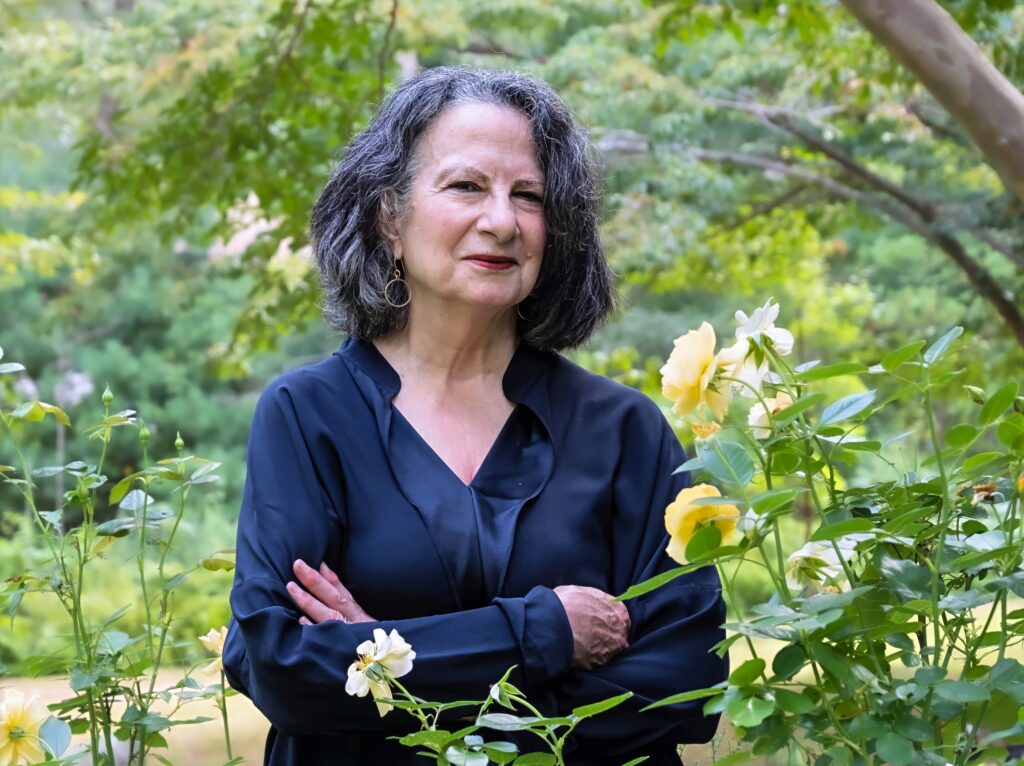
Lynette D’Amico is the author of Men I Hate, the winner of the Gournay Prize for essays, published by Mad Creek Books in February 2026. Her husband is P. Carl, author of the critically acclaimed memoir Becoming a Man: The Story of a Transition.
This post may contain affiliate links.