


“Culture today is infecting everything with sameness.”
—Theodor W. Adorno and Max Horkheimer, “Dialectic of Enlightenment”
In the last ten years of literature, new authors have obsessed over understanding the internet. The early 2010s saw an onslaught of novels Lauren Oyler’s Fake Accounts, Vincenzo Latronic’s Perfection, Patricia Lockwood’s No One is Talking About This) that attempted to capture the experience of being on the internet. To these authors, the internet was another realm, a strange portal. Their protagonists weave in and out of their world, the real world, and that of the internet. Oyler’s protagonist enters this otherworldly realm: “I tapped one of the icons, Instagram, and a familiar layout expanded to fit the screen. A row of circular user photos along the top indicated accounts that had posted Stories… At the bottom of the screen was a row of understated line drawings, a house, a magnifying glass, an addition symbol, a heart.” Lockwood’s character enters too, a dreamlike world enveloping her: “She opened the portal, and the mind met her more than halfway. Inside, it was tropical and snowing, and the first flake of the blizzard of everything landed on her tongue and melted.” The internet is their subject. The early internet novel speaks to the experience of being online, trying to capture it, and render it artfully. Their characters enter this realm, often bewildered at what they find. Within their pages, these books essentially try to capture the effect of the internet, making the boundary between life and life online clear.
As of late, a new kind of internet novel has arrived. These books are not interested in rendering the internet artfully. In fact, they do not even need to relate directly to the internet in order to embody it. Rather than trying to contain the experience of being on the internet within its pages, the book takes on the very shape of the medium. To these authors, the internet is not distinctly separate from our realm; it is our very reality. Sophie Kemp’s Paradise Logic, Honor Levy’s My First Book, Olivia Kan-Sperling’s Little Pink Book: A Bad Bad Novel, and now Anika Jade Levy’s Flat Earth and Madeline Cash’s Lost Lambs draw no boundary between the two, collapsing them in their use of language and plot, confusing the novel’s traditional form in the process. Honor Levy pulls language directly from the chronically online: “giving,” “looksmaxxing,” “serving,” “fall of Rome era,” “thinspo,” “femcel.” Kan-Sperling’s book directly adapts the aesthetic of fanfiction, making a novel out of the form. There is no separation in these books between the internet and reality; thus, they become one. The novel itself is online. Whether or not that is its subject, it is its form.
In these novels, characters are detached and unsympathetic, the plot is secondary, the experience of reading, or rather the disorientation created by the author, is the main innovation of the work, and there are too many narrative threads to keep track of, on purpose. The voice is strong, sarcastic, ironic, always whip-smart, tonally irreverent. Even if the details are stupid—masterclasses in “Feminine Energy Principles,” latte art, forays into Reddit—the application is clever, always leading to a punchline about modern life’s ridiculousness. They are always written in the present tense. One thing after another only to remember nothing.
These novels do not ignore the problems of postmodern life: Kemp’s book, for example, explores the pervasive presence of male violence over women’s lives. Her protagonist endeavors to be the best girlfriend ever; meanwhile, said boyfriend smokes crack with his ex, his shipping container apartment also functions as a punk venue (the location of much of the book), Serbian research chemicals are taken, a brief career in the waterslide commercial business is explored, and much more. It is not that the characters are unsympathetic or that the plot is nonexistent; their fractured, fragmentary form focuses on entertaining the reader, bombarding them, mimicking the experience of opening one’s phone—an onslaught of images at a tempo that leaves no time for contemplation nor invites it in the first place. It is that the reader is not given time to think.
These debuts are deliberate about modulating the reader’s experience, exerting influence on the experience we have when we read. They endeavor to make them uncomfortable, unsure, or even change their understanding of what a book can be. These books remake the novel’s function into something beyond entertainment, focusing not on the emotional or symbolic relationship between reader and text, but instead on the affective relationship between reader and fleeting moments of humor and entertainment.
The more of these debuts that come out, the more a pattern emerges: the novel is changing to respond to our curiosity about the internet and how it is changing our lives, and the authors do so by mirroring the experience of being online—a departure from the early internet novel. Thus, these novels do not take the internet as its subject, but rather as its form. These books are what I have been calling the “stimulation” novel.
***
Unearthing this category as a kind of novel reveals a cybernetic (or rather, symbiotic) relationship between print and internet culture. As Adorno argues in “The Culture Industry,” “With good reason the interest of countless consumers is focused on the technology, not on the rigidly repeated, threadbare and half-abandoned content.” The fact that this writing is in a novel legitimizes it, we attempt to understand it as we have prior books. We evaluate it as art, because it is presented as such. But what if the goal of this art is mimesis? Can the novel still be considered a novel if it is only a mirror of this “half-abandoned content”?
As our attention spans dwindle and our phones loom over our everyday experiences, we are increasingly demanding that novels capture our attention in the same way. These novels do not merely mark a stylistic shift towards a nihilistic voice reflective of the postmodern experience, but rather a change in the form of these novels. Giving language to this new type becomes essential to understanding literature as it reacts to technological advancement, changing the way we read. In “stimulation” novels, plot is immaterial, as is the traditional form of the novel: to understand, or even to explain it, is besides the point. The point is to bear witness to the content itself, to take in the “threadbare” content. Connecting emotionally or garnering symbolic depth from the novel is not the intention. The intention is to create a mimesis of the internet, to question what the novel itself really is, or what it can become. They bend the rules, and the novel bends to this new form. The reading experience doesn’t encapture the internet, it recreates it.
Madeline Cash and Anika Jade Levy join this parade of debut novelists, continuing to excavate the post-internet novel. Cash and Levy’s project, Forever Magazine, predicted this change in printed matter in the early aughts of the pandemic as they remade editorial standards and content, describing Forever as “the de-virtualized world.” They focus on live readings, reduced editorial standards, and esoteric, themed editions, publishing voice-y short fiction and essays, laundering “credibility and clout.” They described Forever as having “no barrier to entry… It’s the most exciting thing happening online.” The magazine is in print, but it’s an iteration of the internet.
Cash and Levy’s novels are essential to understanding what the “stimulation” novel is doing, as they are most emblematic of this form. By running Forever Magazine, they are acutely aware of the increasingly permeable membrane between what is internet and what is print. It is online, yet you can hold the work in your hands. Realizing that the “formal and institutional” process of publishing could be adapted to “just print [Forever] out and call it a magazine and it is,” they have continued to change the utility of print with their novels. Their editorial standards mirror the immediacy of their novels, “If the first sentence isn’t killer, I’m not going to read it.” Given their acute ability to collapse the way we experience the internet and the way we experience stories into one, Cash and Levy’s books render reflect the experience of the internet, emblematic of the larger trend of this mimesis. In osmosis between the two forms, their novels void the previous barrier between the experience of print and the internet.
***
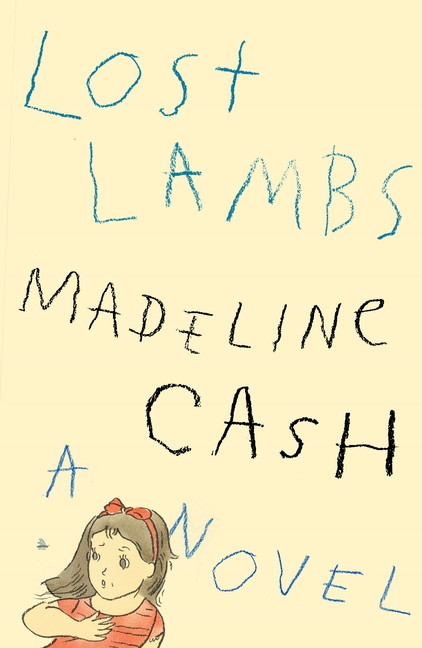
In Cash’s debut Lost Lambs, the story goes like this: anti-aging blood infusion, a French cinema-obsessed priest, human trafficking, lesbian love stories, and internet terrorists delineate a plot with no beginning or end. Its maximalist aesthetic renders stimulation as both narrative fuel and cultural condition, leaving readers drowning in a sea of information. We are promised a story, but instead we get a sequence. Adorno put it succinctly: “The promissory note of pleasure issued by plot and packaging is indefinitely prolonged: the promise, which actually comprises the entire show, disdainfully intimates that there is nothing more to come, that the diner must be satisfied with reading the menu.” The novel used to ask for patience; now it rewards distraction.
Following the Flynn family through their life in an unnamed East Coast town by the sea, we see Bud and Catherine, formerly a musician and a photographer, raising Abigail, Louise, and Harper. Bud now works as an accountant for a local harbor company, and Catherine is a checked-out stay-at-home mom. They have fallen out of love and into polyamory. Their three daughters navigate adolescence by dabbling in Islamic fundamentalism, dating mercenaries, and unraveling local conspiracies. The labyrinthine plot proceeds, intentionally transient. The promise of plot is enough, thus the reader is satisfied by merely reading the sequences, whether or not there is resonance beyond the act of doing so.
In one scene, Harper, the youngest Flynn, speaks to her priest in confession, unveiling an ambling list of actions she claims to have done.
“I’ve been stealing Mr. Friedman’s Trizoletin from the pharmacy and selling it at school. Sometimes I light small fires behind the laundromat. I started Father Hayworth’s nickname—Father Gayworth—and it’s really caught on. I sent a video of Nordic pornography to everyone in my dad’s work email—it’s a really specific genre, lots of pelts involved. I stabbed an X-Acto knife into the tire of the church van in the parking lot on the way in here. I have been teaching myself Latin to mess with my school’s Pentecostal group, burning my hands with a magnifying glass and claiming stigmata. I’ve racked up significant debt shopping Korean wholesale websites on my mother’s credit card. I stole some mousetraps from the Squeaky Mart. I don’t know what I am going to do with them yet. Last week I freed a lobster from the lobster tank at the Golden Dragon and left it in my sisters’ bathtub. And I cut off Missy’s braid in the locker room after tennis and put it in her mother’s mailbox.”
The reader watches with no active process of relation to the text. It matters not why she did these things, nor if in fact she did them. The telling is the essential action, and these stories are told without emotional connection or sympathy. We do not wonder why Harper feels the need to lie or lash out in this way; we take in the stories as they steamroll before us, more relieved with comedy as each anecdote unfolds. The lack of stakes and wonder about the impetus of these actions reflects the novel’s indifference to its characters, their intentions, and who they are. Not attempting to render symbolic depth or interiority of a traditional novel, storytelling becomes a puppet for stimulation itself.
The book resists retelling. Readers are kept engaged by shock value and ironic humor. They are the indifferent witnesses to the events that unfold, but refuse to bear testimony to any of it. The readers have no emotional experience, nor find symbolic meaning when they finish the book. Instead, they feel indifference. The book delivers no emotional or moral experience, but that is precisely the intention of its 300 pages. The affect of reading these kinds of novels is apathy. Cash renders the experience of “entertainment” shaped by the internet. For us, reading the menu is enough.
Today, entertainment has become external stimulus prompting engagement. It lacks connection, stakes, and emotional resonance. Without moral or artistic standards for entertainment, consumption becomes an aesthetic. And these novels thus mark an irrevocable shift towards that aesthetic, one bravely explored by its authors but dangerously mimetic: a recreation of the internet that breeds only irreverence towards art objects.
***
Like Lost Lambs, Anika Jade Levy’s novel Flat Earth takes amusement as its ideal. Avery, a disillusioned grad student, trails her best friend Frances in academic achievement and personal milestones. Frances has generational wealth and makes an award-winning documentary about flat-earthers on 16mm. Avery is addicted to Adderall and is a failed writer, because she does not write. Frances gets married and returns to her home of South Carolina. Avery stays in the city and has an affair with a law professor. Eventually, Avery finds an entry-level publicist job at a right-wing dating app made for incels, fans of male podcasters, and women who needlepoint. The app is called Patriarchy. She takes advice from an Australian influencer about how to attract high-value males while Frances returns to the city for a 16mm showing of her film on a festival circuit. Avery continues not writing, taking Adderall, and having sex with men who are terrible to her. The book touches on the trap of contemporary femininity, political disillusionment, and artistic solipsism. But the story rolls out so rapidly that it is impossible to care about the characters. Avery’s apathy towards her own life, and her inability to change it, is mirrored in the reader’s experience. Every chapter opens with observational vignettes or aphorisms that detail the corporate, capitalist hellscape of New York, as well as the terrifying nature of being a woman in America, with poetic indifference.
“As I crossed the street, squinting at the sun, I nearly got hit by the identical model of dirty white Acura my dad drove when I was little. I stepped back onto the curb and caught my breath. As the car sped off, I clocked the license plate: kmarx.”
The instantaneity and directness of these details get at the larger interdeterminacy of these books, which forecloses a possibility for conclusiveness, judgment, or resolution. The perpetual present in these novels means they refresh like an algorithm, delivering repeated dopamine hits as every quip lands.
“Our big targets right now are movement and community: men who eat uncooked organ meat, sports-gambling enthusiasts, porn-sick degenerates, downwardly mobile white men in red states. Don’t look at me like that, sweetheart. I’m not the one who deindustrialized the Rust Belt and sent all our manufacturing overseas.”
We keep bearing witness, we stay detached, we maintain a sense of humor, and thus a smug cool for being in on the joke. The books do not merely take on things we see on the internet—texts, chat rooms, dating apps, reels of influencers telling us what to do—they replicate the experience of being online by bombarding us with an endless stream of new information with which we form no connection. The mode of narration is incompatible with tragedy and despair, as well as vulnerability and care. There is no demand for reaction or emotion. A feeling of inevitability arises when reading. The apathy we hold is towards both the content and plot itself, and the larger political stakes laid out by the books. We share language and information, and we refuse to relate to any of it emotionally. That border between the online world and the reading experience frays. Just more noise. But instead of on a screen, we experience this on the page. Our dulled emotions towards these forms means we read less carefully, and care less in general. Novels begin to pacify us as our phones do.
The conclusion of Lost Lambs continues with this theme of apathy, coalescing with an image fundamentally incompatible with the apathy of the rest of the novel and thus reflecting a lack of care for consistency and interiority itself. In the last pages of the novel, Cash solidifies this story as a smattering of different images, with instantaneity and directness as its structure.
“Sharing silverware. Passing naan and disco fries and sneaking sips from wineglasses. They were—was he hearing correctly?—laughing. Not fighting or looking at their phones or sitting in stony silence but laughing. Laughing and eating and drawing on the paper table cloth with dull crayons. The dad fed the church lady a bite of a lobster roll. The contractor stroked the mother’s hair. And the girls—they were each alert and engaged. Prodding one another playfully. Talking about how the youngest had just gotten her first period—gross—and how the oldest would be attending a nearby college. How unique her college essay was. There was love.”
The disorienting effect on the reader is precisely the point. These authors are interested in the modulation of the reading experience, the ability to change what it means to read, or what a novel can do. Images and icons precede words and symbols in importance. Creating prolonged spectacle, the ridiculousness of the plot prevents the active process of relating, further fostering passivity on the reader’s part.
The plot reflects the author’s awareness of everything wrong with our late-capitalist world, rendered perfectly, but cannot solve these problems and refuses to deal with them except with humor. The reader is emboldened by the text’s purposeful futility, fueling the nihilistic perspective and furthering a detachment from the problems the novel presents. This prevents the reader from connecting to the plot or the characters, thus evacuating meditation from the process of reading. Amusement is the object. It allows us to put things out of mind, to dismiss suffering or pleasure even when it is on display. It allows us to escape, as our technology does: it dulls the mind and allows us to immerse in the ebb and flow of information, desensitized. Adorno writes of cultural production that “it is indeed escape, but not… escape from bad reality but from the last thought of resisting that reality.” The “stimulation” novel thus prompts not a political apathy that dampens resistance, nor the hope for something better. It allows us to demand nothing from the art object; mimesis becomes enough.
***
In an interview, Cash described individualism’s pervasiveness: “When we rely on institutions for all of our needs, we no longer have to, like, care about each other.” Her writing process mirrors this dilemma: in her own words, she is inspired by her own “delight and compulsion.” Now, instead of relying on cultural institutions like publishing houses to address our need to be inspired, taught, and touched, we merely demand that they keep us entertained. We have replaced the emotional release of entertainment with stimulation to harmonize with an increasingly short attention span. And in response to economic need, publishing houses and cultural institutions begin to bend to these desires.
Early in Lost Lambs, Cash describes a sleeping Harper sucking her thumb as “a little ouroboros.” The cybernetic structure of the novel mirrors this image: the work keeps eating itself, destroying what was there, and reinventing itself. Similarly, in Flat Earth, as Avery meets people she feels she has met a million times before, she “sensed that all of this had happened before and all of it would happen again.” Both novels present this feeling of infinite renewal. Unlike novels of the past, we are faced with that problem in writing more than ever before, and even moreso in publishing. As the serpent eats its own tail, destruction and rebirth occur: new things are produced with disregard for the old. There is too much with nowhere to go, the cycle keeps spinning, the tail endless.
Cash and Levy respond to their own desire to “print out the internet.” Among other debut authors, they explore the new frontier of writing in the age of the internet, when the internet is often our medium. They question how to mediate the two forms, bringing them closer and closer together. They explore what it means to make reading a novel a synesthetic experience of compounding screens and experiences. Publishing houses follow suit as the trend expands and popularizes.
The publishing industry exists and fights to survive in the late-stage capitalist world. Trying to figure out what people want to read in this world of immediacy and stimulation poses its own issues. Primarily, economic ones. How do we get people to pay attention to reading? We print out the internet. Lost Lambs is on pre-order for $28, and the cover of Flat Earth proudly boasts a $26 price tag. As we demand art to be increasingly marketable, we shift the composition of these cultural commodities as well. They are not art objects, but products. We have to make books as stimulating as an endless scroll, flowing from one video into the next, barely remembering what we experienced three seconds before. We make reading as oversaturated and overwhelming as digital culture itself.
—
A quarter of a century ago, James Wood asked if the contemporary novel would “dare picture life? Or just shout spectacle?” Lost Lambs and Flat Earth, among the rest of the “stimulation” novels, are clear indications that we have moved into spectacle: a reflection of the current publishing and political landscape. One searches with deft hand for irreverent authors, emblematic of the zeitgeist, who reform the novel. The other promotes an apathetic and nihilistic spirit, benefiting from the belief that nothing can be done, the notion of inevitability, which dampens care for ourselves, others, and the culture at large. These debut novels suggest that contemporary writing is so concerned with our world of media that its form, and its politics, has begun to mimic it.
Instead of the early internet novel which critiqued and attempted to explore this new medium, these books embody the internet, whether or not it is taken as its subject. Narrative form mirrors the experience of being online, making the reader apathetic. The nonchalance of the voice mirrors our relationship to the content; like watching a reel, reading an infographic, or viewing a story, we are uninvolved with what we bear witness to. By exploring the internet’s form and aesthetics as experimentation, these novels take on its transience. With delight and compulsion, things keep being written and published, but the soul of the characters is absent, meaning the connection with the reader is void as well. We can read 300 pages about the Flynn family or 225 pages about Avery and leave the books without any moment of inspiration, beauty, or sublimity. We maximize profit values by coalescing amusement, but we reap none of the benefits of reading. What began as a foray into modulating the reading experience becomes a more insidious change of form in which the one place apart from the endless scroll becomes an extension of it. While these books pose an interesting question—what it means to write in an age when both the way we write and the way we consume writing are changing—in pursuit of an answer, they have crowned mimesis as a worthwhile artistic pursuit. Taking reverence away from the art object, these books place the novel’s form in peril, creating stories that the reader can consume with no true end, no center, no point. It captures attention for a moment, it turns profit while returning nothingness to the reader.
If we are entertained, is that the object? The maximalism of the work stimulates readers on all registers, but leaves the reader with no substantive experience of life. If constant renewal is the new norm of what we consume, will this takeover print too? Cash and Levy have proven that we can print the internet. Voice and spectacle reign. Yes, we are entertained by the “stimulation” novel, but we forget what we’ve read by the end of it. In the process, we are convinced of our own apathy. In print, we are pacified, returning to our screens with little discernment towards their difference.
Mia Foster is a writer from Los Angeles. She is currently the Kim Frank Creative Writing Fellow at Wesleyan University and the Managing Editor of the E/X Journal. She is also a contributing writer and editor at House House Magazine.
This post may contain affiliate links.