


Jeanne opens with its titular character, in the pursuit of a translation job in Montreal from a mysterious source, having sex with a stranger and avoiding messages from her abusive husband and literary collaborator back in London. What follows is an examination of the intersection between linguistics and gender through the spiralling perspective of its protagonist.
Through tracking Jeanne’s journey across Europe back to her birthplace of Montreal, Arielle Burgdorf utilizes this loving pastiche of the European travelogue to explore the boundaries of languages, and its relationship to self-perception.
I spoke with Burgdorf to discuss their literary influences, queer representation in the novel, and the differences between Jeanne and the novel’s first iteration, Prétend.
Ava Sharahy: I want to talk a little bit about your influences for the book. I don’t speak French, I’m probably gonna butcher so many pronunciations – I know you were influenced by avant-garde French literary movements like Oulipo and the Situationists. How did those sorts of movements influence Jeanne?
Arielle Burgdorf: So Oulipo, they’re still around. Their vibe is applying mathematical techniques to literature, which is a very strange way to think about things. But I think it’s really interesting. And Georges Perec, who I mentioned in the book, he did a lot of experimental literature that’s literally experiments, ‘I’m just going to try to do this thing.’ He sat down at a cafe and wrote down every single thing he could say, sat there for days and days, and then published that. Then he had another book called Avoid that doesn’t use the letter E. And there’s Anne Garréta, who has a book called Sphinx that I really like, where there’s no gender markers in the book.
It’s things where they’re just trying out different ways and ideas and seeing how that impacts the literature. There was literally a paragraph in the book where I tried not to use any words with E in them, and then right after I used a bunch of E’s. So in that way, it was very directly influenced. But more indirectly, it was just the idea of doing interesting experiments with language and seeing how we can push the boundaries, how we can push what you’re physically doing on a page, which is also why we have the crazy diacritics page where all the accents are just flying everywhere.
And then The Situationists, I feel like they’re not really literary – it’s just artistic and political. But there is a similar thing of just doing experiments in your life – ‘I’m going to flip a coin and whichever way the coin tells me to go, I’m going to go that direction and I’m just going to keep walking.’ That whole idea of dérives, which is just really long walks where you’re wandering through the city.
Were there any other experiments that you wanted to implement throughout the book, similar to the paragraph where you had the no E’s and then a bunch of E’s?
I’m trying to remember. It’s been such a long time since I initially wrote the book. But definitely the accent marks, there’s less accent marks and then there’s pages where there’s quite a lot of them used within the text where they don’t mean anything really. And then there’s the use of different languages with French and Russian. There’s a paragraph where it’s mixed, so half the sentence will be in French and then half is in Russian. Even if you speak both languages, it doesn’t really add up to anything at that point. I forget if this made it into it, but I think there was a part where I was taking Cyrillic letters and just looking at what they look like in English, even though it’s a different alphabet. And I think I put the word – it was supposed to be the word bitch in English – but spelled out in Cyrillic font. Towards the end, when she’s at the giant orange julep thing, I spaced apart the sentence, I cut it up with different periods. More like poetry was what I was thinking, even though I’m totally not a poet at all. I really like reading experimental literature. It’s good to take risks and do experimental things. But at the same time, accessibility is also really important to me. I have students where I don’t want them to have to think of literature as super impenetrable, where they’re immediately like, ‘This is too hard. I don’t want to engage with this thing.’ So I try to do both.
I find it interesting, the way that you play with language, especially with French and Russian. I’m half Russian myself.
I’m also half Russian!
I find the relationship that Russians have with French culture and the French language very interesting, because I know pre-Soviet Union, a lot of Russian aristocrats were aspiring to be French in a way. And I was curious as to how those languages and literary traditions informed the work. Specifically, how did you choose or know when to write in French or Russian or English, especially as Jeanne unravels and the lines blur between the languages?
Great question. So obviously, French and Russian, they’re very strong literary traditions. They have very well-formed national literatures, but I like a lot of the weirder Russian stuff, like Daniil Kharms. He writes really surreal, absurdist stuff. And they banned him at one point from writing literature for adults, so he started writing really fucked up children’s literature, which I think is really cool. I took a class on Russian female writers in college and I got into the modern stuff that people were doing that I think is really cool.
But I don’t know – I think they just both have these loaded legacies that mean a lot to people as soon as you say that word, versus maybe ‘American’ means a bunch of different things to people. I didn’t want to demonize or villainize Russia and Russians, but at the same time, there is a lot of animosity, basically going back to the Cold War. So to have Konstantin be Russian was important, and then also to have other Russians in the book who are cool and not pieces of shit, that was also important to me. Initially, most of his curse words were in Russian. I wanted it to be emotional and also bring out a harshness to him. Then the French, there is definitely more of it when she goes back to Montreal, because she’s encountering French-speaking people and reconnecting with that part of her heritage. I don’t speak Russian myself, so I did the best I could and then I had someone look at it. But I do speak French. So it was really important to me as a translator to do all the French parts myself and then have someone who is actually French look it over. English, obviously it’s the bulk of it, but it’s really interesting that a lot of the roots of English words are French. So it makes these Canadian conversations really complicated when they’re like, ‘We can’t have too many Anglicisms in our language. We have to eliminate that.’ But the Anglicisms actually are from French, so it’s a weird Ouroboros type thing. There was a second part of your question, I think that I forgot.
I might have forgotten it myself, which is crazy because I literally have written it down. But oh, yeah: Specifically as Jeanne as a character unravels and the line between languages blur, what was it like having this more controlled use of language versus this more free form version of it?
That was very intentional. I wanted the reader to at least get that her mind is breaking down. I think it’s a thing that happens a lot, especially as people get older or have brain damage, you lose your grasp on language. I needed it to be this crisis for her, so that she’s forced to address it. That was how I scattered the language. I don’t think any reader can read all of the French and all of the Russian and completely understand every single thing, especially when it’s gibberish that I’ve written. So I wanted there to be a little bit of distance in certain parts, but not an overwhelming amount, for the reader to feel like an outsider, like someone who is learning a language or who doesn’t speak a language. I wanted to have that experience, especially for monolingual English speakers who never get to have that experience often or they can choose to get away from that. The breakdown of language needed to parallel what’s going on internally with her. And then at the end, you get more control back of the language, so it’s a regaining.
You mentioned your background as a translator as well. How did that background inform the writing of the main character as a translator?
I mean, it’s the whole book. I was really frustrated with the way that the practice of translation and the theory of translation was being taught at my university and some of these really old ideas that they still have in translation theory that I feel we need to move past, like this idea of fidelity and “Are you being faithful?” I just was really sick of that. And also everything was really gendered, like the metaphors used to describe translation are incredibly gendered in a lot of translation theory, so that was annoying to me. And I’m not a full time professional literary translator, it was something I’d done for my PhD, and then I also did it for fun. I published a couple of translations of poems. But I was just getting really sucked into this world of translation, so there’s some of my own experiences in the book. I think of just like, how generous do you want to be to the person you’re translating? What kind of relationship? What is the power dynamic going on? How is your mood when you’re translating, influencing the words and the diction?
It’s interesting, because you draw these really cool parallels between how people treat Jeanne or, I guess, John/Jean, as they perceive her as a woman – even though I know that gender for her is a very interesting thing – how she’s perceived as a translator as well, this idea of being seen and not heard. There’s this one specific quote: “Her job, she reminded herself, was to be invisible. No one wanted to see her dirty fingerprints all over his poem.” “The audience needs you, but they don’t want to see you or your work.” This idea of being seen and not heard and making herself smaller for the men that are producing these works. Can you elaborate a little bit more about that?
That’s an attitude in translation. It’s also something that shows up in writing. One of the people I’m named after is Ariel Durant, who was the wife of Will Durant. She was his 13 or 14 year old student at one point. They got married and she helped him write a lot of his books, and he gave her credit in almost none of them. And I see a big parallel there. There’s a lot of writers actually, who either their wife was their translator, or they and their wife worked together on a translation, and she’s completely erased, not credited. So it’s a labor issue is how I think a lot of it. Then I think in terms of cis women, there’s this added dimension often of, you’re expected to do work for free, you’re expected to do emotional labor for free, you’re expected to do housekeeping, and domestic stuff is not considered valid work. It was the movement they had, I think it was the 70s, where you had to pay babysitters a certain wage, and they had to get healthcare, and that was completely crushed. I just see parallels there.
And I think of the erasure of translators, which is why it’s important that she’s (Jeanne) scribbling her name on the book. People will not know that a book is translated and they won’t know who the translator is and it allows them to think that the book just appeared out of thin air in English, which is really taking it out of context. A lot of those famous works, when we were taught things in school, they never talked about who the translator was, and it really depends which edition and which translator of The Odyssey for instance, that you are reading, because part of the person’s personality and brain is in that translation.
Translation, at least in the book, is seen not for its utilitarian function of, “We literally have to translate to English to get a wider audience,” but as an art form in itself. What are the similarities and the differences for you when you write original fiction versus translating someone else’s work into another language?
Translating for me is more of a puzzle than writing fiction is. It feels like there is a specific answer, whereas fiction, it just feels endless, which is good and bad. It’s good to have boundaries, it’s good to have structure, but I think ultimately, I learned through this writing experience that I do prefer writing fiction to translating someone else’s fiction. I still really enjoy it, but there’s just something about, I can control everything, I can make the story go wherever I want it to. Figuring out someone’s voice is really difficult, but I think I have a decent sense of my own voice and what I want to express. Then there’s just the way that translation is received – I think people treat you really differently when they’re talking about fiction that you wrote versus something that you translated, even though to me they’re both equally creative, they’re both art. Jennifer Croft says, “I wrote every word in that book that I translated.” It’s a book she wrote in some sense, but it’s also a book she translated. They’re both really interesting, they’re both really complimentary. I think translating really forces you to think about diction a lot more, and then writing fiction just gives you really expansive senses of what is possible, how you can frame things, and the power you have over the reader.
I want to talk a little bit about the link between translation and identity and language and all these things – first, how do you refer to your main character? Because I know that she goes through several different names throughout the book.
I probably say Jeanne usually. I like it being confusing for people, I like people not knowing how to refer to her. I’ve had a lot of people tell me they’re not very confident in their French pronunciation and I’m like, “Oh, I’m also not always completely confident in my French.” It’s been a real whirlwind, also because initially there was a book version that was published in Canada and then I published the next version in the UK, and I live in the United States, so all those people have very different ways of pronouncing things. Even when they’re spelled, even when that’s the same name, they have very different pronunciations that they tend towards that it’s just imbued with different things in different contexts. So Jeanne is fine, to make that short.
Her name and identity are constantly in flux, shifting, and I wanted to hear more of your take on that. I think on the surface, you can see it as not just an indication of her identity, whether it’s gender or sexuality-wise, but what that says about her inner world as well and how she’s had all these identities at once, and I want to hear more of your take on that.
It’s a lot of things – on one level, it was definitely meant to be part of this metaphorical thing of, she is figuratively supposed to be a translation. She has all these different versions of herself that are shown through partially, these different names. Then there’s other things – cutting her hair, there’s visual things, so that was one idea. They’re different pieces of her but they’re all valid and they are all her, which to me is the same as a translation. Whether it’s something that’s translated into five different languages, all of those are still the book, but they’re also their own things. That was one level. Then it’s also just true that when you cross a border, people will start pronouncing things differently or they will call you “Madam” instead of “Miss” or “Mrs” – just the demands of different languages and countries. Part of her experiencing abuse is that she’s just losing her sense of self, and so she’s very unstable within herself and she’s like, “Who am I? Am I a wife? Am I Konstantin’s translator? Am I something else?” She’s figuring that out, so it’s in flux.
But I think for me, just as a person, I also strongly feel that way. I have lived so many different lives, I’ve in lived so many different places, that I feel like sometimes I’m just collapsing under the weight of all the different people it feels like I have been. I wanted something of that too, of just, if you have a diverse range of experiences in life, you have all these former selves, and you don’t lose those – they’re still within you – but you’re not currently that person. And then the identity thing, I think it’s, again, complicated. For some people it’s very easy and specific to answer the question of where you’re from. Sometimes it’s a very racially loaded question where people are asking, where are your parents from, what ethnicity are you. Is it the place you currently live? Is it the place you were born? It just could be so many different things to me, and I think the accident of chance of where you were born feels less important to me than where you’ve chosen to live your life. I also just think borders are fake and bad – they’re a fiction that we all agree to believe in, like money. It is very real in one sense, and it does hurt people and change lives in one sense, but on the other hand, it’s the same land.
The publicist, Lydia, pitched this work to me with the tagline – I think it was, “love, sex, and gender fuckery.” As a queer non-binary writer, how does your relationship with gender and sexuality shape how those themes and identities in Jeanne, both the book and the character?
I wanted to challenge the idea of gender with some of the ways she acts and the choices she makes, just change her name to John and then she’s very insistent, “No I’m not trans, I’m just a woman named John.” It’s been tricky, because I think people want to read me into the book and see me as John and Jeanne, and I don’t think I really parallel her exactly in terms of gender. I see her as someone who’s figuring it out, and maybe she eventually ends up using they pronouns or identifying with genderqueer, or maybe not. Maybe she ends up being a cis woman who doesn’t feel she completely fits within the binary. I very much feel strongly that I am non-binary, but at the same time I also don’t present as people’s idea sometimes of non-binary. I don’t look androgynous, which is annoying because it tends towards masculinity. I have dysphoria in some sense; I just don’t like how people read my body in the world, I don’t like the assumptions that they make, and so that’s part of what she’s doing. When she’s like, “I’m John, you can’t assume anything about me,” and then she talks about being female with streaks of male, I think that’s something maybe a cis person would feel and maybe a genderqueer person would feel and maybe a trans person would feel. As she’s breaking down her identity, the binary of male and female is becoming blurrier and blurrier for her. And she knows she’s queer because she has already had queer experiences before she meets Konstantin, and then she continues to have queer experiences. I think it was in Scotland, the reading I did there, the bookstore owner was talking to me and she was like, “The way you do gender stuff is just very matter of fact.” It’s just like, deal with it, this is what’s happening, I’m not gonna explain it for a cis audience, I’m not gonna be like, “This is what you know genderqueer means.” She’s just, I am who I am. I think she says, “I’m not a boy or girl, I’m a pair of lips floating in the night.” For me, gender and language are very tied together. In English it’s a lot about pronouns and in French it’s all about a lot about endings, so it’s very inescapable and it creates a lot of problems. Then people try to solve those problems by creating new language, which I think also often doesn’t solve the problem, because society’s not changing even if we have. It’s useful to have language, it’s useful to have new language, but I don’t know. In France I think it was their minister of culture who said, “The French language will never be gender inclusive” – it shows that it’s still a really important topic, the way that people feel offended by things and need to defend things, even when it doesn’t impact them at all, like trans women doing sports.
Speaking to the inherent queerness of the book, you showcase a lot of different art scenes in Jeanne, like Konstantin’s readings to the queer scene that Melusine, I think that’s how you pronounce it, is involved in in Montreal. I feel that as writers, and especially as queer writers, there’s such a difference in when you find yourself in a space where it’s clearly all straight men, versus you’re in a space with other queer artists. I was wondering what it’s like writing the differences between those different sorts of scenes, and how your own involvement in any art scenes may have informed that as well?
I’m not super involved in art scenes that aren’t literary, but I feel like a lot of my friends are, so I’m very aware of it. The thing with the all-male poetry reading or the all-male MFA or whatever, just a fiction reading, it feels often to me like a competition where men are trying to one up each other, they’re trying to impress each other. They’re really into getting very drunk, there’s a lot of this bad boy literary idea, but it’s not really tied to radical ideas anymore, it’s not really tied to revolutionary thinking. It’s about trying to check your knowledge of philosophy or history or literature, so it’s very exclusive and it’s very uncomfortable or unwelcoming. That’s his (Konstantin’s) reading, and then I wanted the Montreal one to be the opposite of that. It’s welcoming, but I was also very gently poking fun, just young people who go to art school and take themselves really seriously. I think it happens to everyone, you just have to go through that, but they’re a lot more accepting, friendly, lots of languages being spoken, and people doing different kinds of art was also important. To have a diversity of not just one thing – it’s poetry, and we know exactly the poetry is going to be right, this idea that you wouldn’t be able to anticipate everything that everyone was doing. Then I called it “an English night of poetry,” and that’s because there was a very famous Québécois event that was called “night of poetry,” and it was a very political event around the French language. If you are Québécois, you would get that, but otherwise it’s just a poetry party right.
My last question is, I wanted to get some background on the other work that you wrote, Prétend. I saw that and I was surprised to see that on the summary listed on the publisher’s website, that it has the same plot and the same characters as Jeanne, even though they were published a year apart. Can you elaborate on any further differences or similarities between the two works?
So what happened was, I wrote this book, and then Moist approached me about publishing it in the UK, but they wanted to make it a new and different book. They were thinking of it as an English language translation of a book written in English. They wanted it to have a different title, they wanted me to do a bunch of edits to it. And the way it was marketed – their readers, it’s a lot of art community, a lot of critics. They just have a very specific vision of what their books are, and it was different from what End of the Line is doing. So it was fun to go back and get to edit a book that had already been published, but it was also exhausting. You do want to be done at a certain point. So the things that they asked for, they wanted more French and Russian in the book, which I was happy to do. They wanted more about this idea of the travelogues that Jeanne’s telling. And this idea of packaging the idea of an American, but she’s not really an American, American-Canadian person who goes to Europe and is transformed, that thing. That was parodying that or playing around with it. They were interested in the French new wave movie stuff. They also asked for a lot more diacritics and we made the diacritic page, so it was a lot more visual stuff. But it was really fun. The cool thing was, I got to have a different cover. We got to have a different title. I’m aware, obviously, that I did not write two books. I have published one book, really. But at the same time, they do feel different to me. Does that make sense?
No, definitely. And I’m grateful for the clarification because when I saw the other book, I was “Wait a minute, wait a minute.” I also have one additional question: I’m interested in this idea of parodying the typical travelogue, the subversion of this, as you say, this North American who goes to Europe and has this inner transformation. I wanted to know, what was it like exploring that at further length in the second edition?
It was good. It was a lot of having to question and challenge myself. France has this legacy of literature, they have this cultural reputation, and it is a lot of literature that I love. It is a really influential and interesting and complicated culture. But at the same time, I think there are Americans who are Francophiles and Anglophiles, and they just consume this stuff and they think it’s unproblematic. And they’re just, “Oh, I love Paris, berets, the Eiffel Tower,” it’s very simplistic. And at the same time, you’re like, “What about colonialism?” So it was challenging my own love of things, and like, is it valid that I love those things? Why do I love those things? Is it just because I’m a Westerner, and I’ve been taught to value those things more than other things? So that was part of it. The part where she’s in Paris was very directly thinking about, I think I even mentioned, just the cultural weight of Paris. And Berlin too, I think I say this, it’s just that people come there already expecting to have a certain experience, right? Because they’ve seen so many movies or books or TV or whatever about it, it becomes a self-fulfilling prophecy. Then it was also covered with this dark thing of her relationship with Konstantin. She’s going to all these beautiful places, and we’re starting to see the seeds of him being a bad person. I think the typical narrative would be they have this amazing journey, then maybe they get married or they’re on this completely romantic journey. Then immediately as soon as she’s in London, and she’s sitting still for a little bit, it just all falls apart. It was important to have her in motion and thinking about travel. I put in the thing about the postcards in this edition. And the Camargue, I think that was something I got to add. Then she also goes to the Museum of Broken Relationships, right? And that’s thinking about the breakup while she’s at the beginning of her relationship on a romantic trip. So it’s just putting in there, the reality of things. Or just critiquing it and poking maybe fun at it again, like there’s more happening below the surface of your photos you might see on social media of someone who went to Europe, right. I do just want to say, my publishers aren’t trying to make it look like we have multiple books that are new and different.
No, I wasn’t trying to assume that. I assumed it was more of an artistic thing or a second edition thing. I wasn’t trying to assume you were trying to pass it off as another book.
Cool. No, I don’t necessarily think people think that, but I don’t know. It is a thing people do. It’s just rare, I think. And fuck JK Rowling and fuck Harry Potter, but there were two different titles for the first, it was Philosopher’s Stone and Sorcerer’s Stone was the American versus UK. So it’s definitely different. I love seeing what French people have titled American movies. It’s always very different and very funny. So it was cool to get to think about it as a translation.
Thank you so much for speaking with me. Do you have anything else you want to add?
I don’t think so. I think one thing I didn’t say at the beginning, when I was talking about The Situationists, is Guy Debord. He’s a famous guy, but his wife had this book. She has several books. And they’re both reworkings of Francoise Sagan’s Bonjour Tristesse, but she called them “fake novels.” One is more literary and the other one is more bare bones, but they’re both about reworking these scenes from these other novels and people taking strolls in Paris. That was something I tried to directly use and think about, like, what does it mean to have a fake novel? What does it mean to have a novel that’s thinking, aware of itself as a novel, and thinking about that.
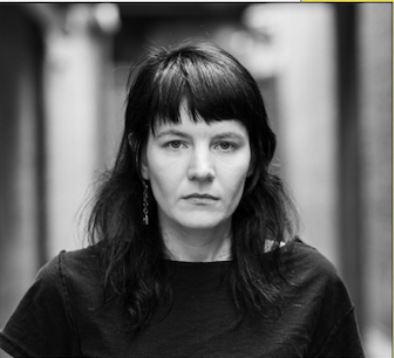
Ava Sharahy is a writer and student based in New York City. A recent graduate from Sarah Lawrence College and Columbia University’s Graduate School of Journalism, their writing focuses on art, gender, culture, and the way these all intersect.
This post may contain affiliate links.