


This essay was first published last month in our subscriber-only newsletter. To receive the monthly newsletter and to support Full Stop’s original literary criticism, please consider joining us on Patreon.
Nigeria’s National Film and Video Censors Board (NFVCB) is the official arbiter of what can be shown on screen. Tasked with balancing artistic freedom, public morality, and national security, its stated mission is to “contribute to the positive transformation of Nigerian society through the censorship of films and video works.” In practice, however, the Board wields outsized influence over which stories reach the public and how they are told. While it confers required permission to filmmakers by granting classification and legitimizing domestic distribution, it can also constrain them through mandated cuts, delayed approvals, or outright bans. For filmmakers tackling politically or socially sensitive material, the NFVCB is both gatekeeper and gauntlet.
This duality, which is the potential for both recognition and restriction, shapes much of Nollywood’s contemporary political cinema. Directors seeking to address insurgency, corruption, or historical trauma must navigate not only the creative demands of storytelling but also the unspoken boundaries drawn by state authority. These lines define which narratives are safe and which are too threatening, and they make visible the broader stakes of cinema in Nigeria. Film is not only entertainment but a site where power, memory, and social accountability collide.
Despite collisions resulting from its restrictiveness, the NFVCB remains a necessary institutional gateway for filmmakers working within Nigeria. Classification by the Board confers legitimacy, reassuring investors wary of regulatory risk. This, in turn, determines the prospects of a given film, including whether it can be publicly screened, attract distributors, and secure adequate advertising. This gatekeeping role is not marginal. In 2025 alone, the NFVCB reported that it classified 1,185 films across multiple languages and regions, underscoring both the scale of Nollywood’s output and the Board’s centrality to the industry’s circulatory infrastructure. For many filmmakers, particularly those without access to international streaming platforms or festival circuits, approval by the Board is the difference between visibility and disappearance. In this sense, the NFVCB does not merely police content; it structures the conditions under which films can circulate, earn revenue, and enter the national cultural record. Notwithstanding, this vetting function is inseparable from its coercive power. Because access depends on approval, filmmakers are compelled to anticipate the Board’s sensibilities long before submission, shaping narratives preemptively in order to survive the classification process. Censorship thus operates not only at the point of review but upstream as well, disciplining imagination itself.
Nowhere is this tension more visible than in Jadesola Osiberu’s Gangs of Lagos (2023). Distributed globally via Amazon Prime Video, the film traces the rise of Kazeem, a gang leader who becomes “Eleniyan,” or boss of all bosses, highlighting how institutional neglect, poverty, and political corruption funnel young people into cycles of violence. The film’s most controversial image is the Eyo masquerade in which a revered Yoruba cultural icon is reimagined as both a disguise and weapon for gang violence. Critics accused the film of desecrating culture, but the deeper provocation lay in its depiction of how sacred traditions can be conscripted into systems of political power to legitimize brutality and mask corruption, which is a reality that the NFVCB and local authorities were not eager to confront.
This depiction struck a nerve, as Kazeem’s ascent parallels long-standing allegations that Nigerian politicians rely on armed thugs to rig elections and maintain dominance – claims that have trailed powerful figures, including current President Bola Tinubu, for decades. By rendering this relationship visible, Gangs of Lagos collapses the distance between criminality and governance, suggesting that the two are not opposites but collaborators.
Although Nigeria’s National Film and Video Censors Board could not ban the film outright due to its international streaming release, the backlash culminated in a Lagos High Court order prohibiting its public screening. Culture was invoked as justification, but the perturbation ran deeper. What unsettled authorities was not merely the misuse of a masquerade but the film’s insistence that culture itself can be conscripted into systems of violence that often serve those in power.
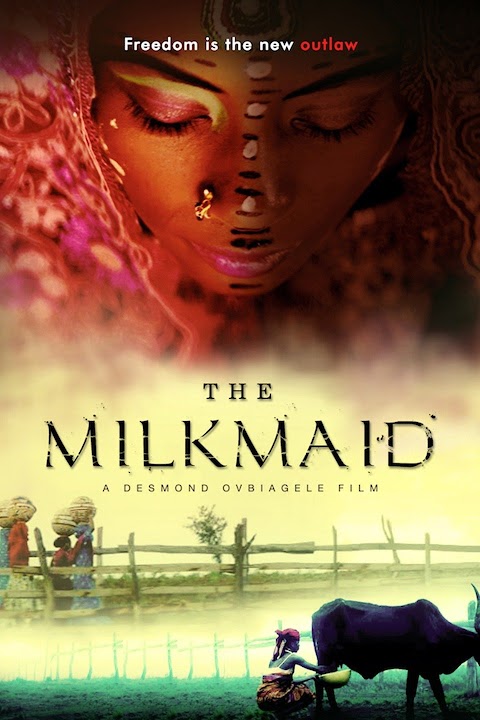
Where Gangs of Lagos was censored for its cultural critique of power, The Milkmaid (Desmond Ovbiagele, 2020) confronted a different but equally destabilizing subject: the lived reality of insurgency in northeastern Nigeria. Rather than treating terrorism as a distant spectacle or abstract news, the film embeds violence within domestic and communal life including weddings, homes, and sibling bonds, forcing viewers to experience conflict as intimate, recurrent, and inescapable. This proximity is central to the film’s power and to the unease it generated among state authorities.
The narrative follows Aisha, a Fulani milkmaid whose village is attacked during her sister Zainab’s wedding. The suddenness of the assault – militants arriving without warning, scattering families and abducting civilians – mirrors the tactics of real insurgent groups and disrupts the illusion of safety that often separates audiences from conflict zones. Zainab is taken, and Aisha’s search for her sister draws her into the insurgents’ world, where she is coerced into marriage with Dangana, an ideologue whose quiet disillusionment complicates the film’s moral landscape.
What distinguishes The Milkmaid is its refusal to aestheticize terror or offer emotional distance. Apart from physical violence, the film unearths psychological transformation as victims become recruits, survival requires complicity, and ideological indoctrination reshapes identity. When Aisha finally reunites with Zainab, she discovers that her sister has been fully absorbed into the insurgent system, actively training other women and rejecting her former life. The film’s most unsettling insight is not the presence of violence but its normalization of how coercion, belief, and fear intertwine until there is no clear return to “before.”
This ethical realism is precisely what activated the NFVCB’s censorship apparatus. Scenes depicting abduction, forced marriage, indoctrination, and the involvement of women and children in extremist networks were deemed sensitive, even destabilizing. By dramatizing insurgency as systemic rather than exceptional, The Milkmaid implicitly indicts institutional failure and undermines official narratives of control. For this reason, as director Desmond Ovbiagele has noted, the film faced a prolonged and exhausting censorship process, involving extensive negotiations and mandated alterations of scenes central to the film’s narrative logic.
Although the NFVCB ultimately granted classification, the delays and enforced revisions significantly limited the film’s domestic reach. Nigerian audiences encountered an abridged version after much of the film’s momentum had dissipated, while international viewers saw a largely intact cut. The irony was stark: The Milkmaid swept five awards at the 2020 Africa Movie Academy Awards and was selected as Nigeria’s submission for the Academy Awards, even as access at home remained restricted.
What The Milkmaid reveals is how censorship in Nigeria often functions less through outright bans than through attrition. Delays, revisions, and bureaucratic resistance operate as soft prohibitions, narrowing visibility and discouraging filmmakers from engaging in politically sensitive subjects. In this way, the NFVCB both enables and constrains: it confers legitimacy while tacitly shaping the limits of what can be shown, said, and remembered.
When considered alongside Gangs of Lagos, The Milkmaid demonstrates how Nigerian censorship adapts its rationale to the perceived threat. When culture is implicated, tradition is invoked; when security is implicated, sensitivity is used to disguise the rhetoric of restraint being imposed on the filmmaker. In both cases, cinema’s capacity to interrogate power, memory, and national responsibility is curtailed not only through silence but also through carefully managed exposure.
Wilfred Okiche, a Nigerian film critic and cultural commentator, expounds upon this very thing, explaining that overt censorship creates a pervasive atmosphere of fear that leads to self-censorship. “From the moment they dream of a story, they are already punishing themselves, editing their creativity for fear of what the Board might do. Even before the filmmaker starts, he’s not allowed to be ambitious, to go as daring and provocative as his imagination could allow,” he said.
Okiche highlights that the storytelling process is inextricably linked to the social, political, and cultural milieu of Nigeria in which these films are produced. He goes on to say that films act as a mirror for society, bringing attention to topics that the mainstream media frequently ignores. However, Nigeria’s stringent censorship environment makes it more challenging to directly address these topics. Okiche’s criticism of the Board highlights the fact that it is particularly detrimental to political films that address topics that are uncomfortable for the powerful. Many filmmakers second-guess their artistic decisions because of fear of negative publicity or financial consequences for taking on politically controversial issues. If not eliminated, the NFVCB needs to be restructured for a more productive goal, he believes.
In an interview with Ovbiagele, he adds that The Milkmaid tells the tale of a young woman caught in the crosshairs of a relentless battle that has devastated Nigeria for years in an effort to expose the emotional cost of extremism. According to Ovbiagele, “The film is a reflection of a personal journey I’ve had watching insurgency unfold and watching its effect on people, especially women. It felt essential to use film to discuss extremism. I believe that since the problem has impacted a large portion of the nation and has the potential to spread, it is our duty as filmmakers to present these kinds of tales given the powerful tools at our disposal.”
Ovbiagele echoes the understanding of many filmmakers in the country; they want to create and display their perspective on realities that happen in the country, but the fruits of their hands get chopped up before ever appearing on the screens of cinemas and homes.
The Board has consistently stated that its goal is to contribute to the positive transformation of Nigerian society through the censorship of films and video works, while “balancing the need to preserve freedom of expression within the law and limit social harm caused by films.” While some industry members support this stated aim, many remain skeptical, arguing that the Board’s approach to politically sensitive topics such as government corruption, insurgency, or police brutality makes it difficult for filmmakers to fully realize their work for Nigerian audiences.
Creativity is subjective and sweet in the mind of its creator, but once birthed into reality, it can become bitter when external forces seek to control it. Ovbiagele, who had followed the standard procedure in sending the finalized version of The Milkmaid to the censor board for evaluation and categorization, claimed that the board insisted that several parts be removed and changed due to their delicate content. He stated, “We went to some length to explain the rationale and logic behind those scenes and to explain their importance to the film’s narrative.” He continued by saying that finding a solution without unnecessarily sacrificing the film’s concept required some time. They eventually agreed to provide a classification, but it took a while to reach that stage.
For industry creatives, the government’s frequent prohibitions on artistic creation exacerbate fears of censorship and political reprisal. Just months ago, for instance, veteran musician Eedris Abdulkareem’s song Tell Your Papa, which criticised President Bola Ahmed Tinubu’s administration – particularly the elimination of fuel subsidies, which caused economic hardship – was prohibited from airing by the National Broadcasting Commission. In March 2025, the Senate passed a law requiring social media companies to set up permanent offices in Nigeria and requiring bloggers to register with a national association, which heightened fears of repression. Critics caution that it could stifle expression and silence dissenting voices, while supporters claim it will guarantee accountability.
Nigeria is the largest democracy in Africa, and frequent restrictions on freedom of speech and bans on creative work leave content producers uneasy and in search of alternatives that avoid regulatory obstacles. For example, Òlòtūré was aired on Netflix instead of in Nigerian theatres and the decision proved successful on a global scale, garnering praise from critics and viewership throughout the continent and beyond. However, it generated discussion in Nigeria about whether streaming services constitute a kind of creative exile or a safe haven. Based on the experiences of a real-life undercover journalist, Kenneth Gyang’s gritty drama is about a teenage reporter who becomes entangled in a human trafficking network. It is a mirror to the systematic abuse of women and the complicity of government officials, an approach that probably would not have made it past Nigeria’s censor board.
Just as Hollywood’s Hays Code (1930–1968) regulated moral content, depictions of crime, and the representation of politics, Nigeria’s censorship regime disciplines filmmakers not by silencing cinema entirely, but by steering narratives away from depictions that implicate the state in violence and the rise of extremism. Under the Hays Code, studios avoided showing government corruption, controversial wars, or morally ambiguous heroes, and certain themes like sexuality, dissent, or criticism of institutions were heavily policed. Later, collaborations between Hollywood and the U.S. Department of Defense, sometimes called “militainment,” would further shape war films, whose access to military equipment, locations, and support are often contingent on portraying the armed forces in a favorable light. In effect, filmmakers are not prohibited from making movies about war, but their stories have to align with state-sanctioned perspectives, blurring the line between artistic license and official messaging.
What appears local in Nigeria such as insurgent violence, political corruption, and institutional critique is, in this light, part of a familiar pattern: states using censorship or regulatory pressure to guide narratives, control moral perception, and shape collective memory. Nollywood’s struggle resonates beyond its borders, mirrored in contexts such as Bollywood, where the Central Board of Film Certification (CBFC) monitors directors tackling politically sensitive topics. Like Nigeria’s NFVCB, the CBFC decides which stories are edited, sanitized, or prohibited outright, demonstrating that global film censorship often functions less to suppress creativity tout court than to channel it toward socially or politically “acceptable” narratives.
Within this environment, producing politically charged films in Nigeria demands not only creative ambition but also the resilience to navigate regulatory, financial, and reputational risks.
An earlier flashpoint illustrates how these risks materialize. Half of a Yellow Sun (2013), adapted from Chimamanda Ngozi Adichie’s novel, encountered prolonged delays after the NFVCB objected to its depiction of the Biafran War. The Board withheld classification until scenes involving secessionist politics and military violence were reduced, effectively reshaping how a foundational historical trauma could be represented on screen. The consequences extended beyond artistic compromise. As Okiche notes, “People who invested in Half of a Yellow Sun learnt the hard way. People don’t want to invest in films that might run into trouble.” In an industry still heavily dependent on private capital, censorship does not merely alter narratives; it influences financing decisions, discourages political ambition, and determines which stories are deemed economically viable in the first place.
Rewriting sequences, reducing dialogue, and softening criticism are examples of strategic compromises made by certain filmmakers. Others resist through clandestine screenings, participating in international film festivals, and taking up social media direct-to-consumer tactics. While the room for political storytelling is increased by these workarounds, they also draw attention to a disturbing paradox that Nigeria may no longer be the safest location to tell Nigerian stories. And the true danger is not only the censor’s red pen but the one held by the filmmaker, trembling before they even begin.
Felicitas Offorjamah is a creative writer whose work has appeared in Kalahari Review, Afrocritik, The Guardian, Edge of Humanity Magazine, The Lens Magazine, and Nigerian Travels Magazine. Felicitas has served as an editor for university magazines and newspapers. When she’s not writing, she’s singing the songs she’s written. You can find her on Instagram at @feli.is.a.writer.
This post may contain affiliate links.