


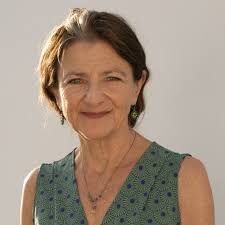
Helen Benedict is no stranger to writing raw, careful prose about deep, complex characters. Her newest novel, The Soldier’s House, lives up to that legacy as it tells the story of an Iraq War veteran who saves the lives of his assassinated Iraqi interpreter’s widow, child, and mother by bringing them to his upstate New York home. The Soldier’s House is a page turner filled with complexity and humanity. Captivating from the jump, it’s a struggle to put this book down.
Jamie Kahn: Having all of these characters in the same household is such an intimate setting. What drew you to this intimate setting for these characters in particular?
Helen Bendict: The idea for putting my characters together in a house like this came from a tiny item I read in a newspaper long ago. It was about an American soldier freshly home from the Iraq War who wanted to save his Iraqi interpreter’s life by bringing him to the States, and into his house. The soldier’s wife, however, said, “No, I don’t want him here, it’s either him or me.” The soldier chose the interpreter. That was all I could find out, but it made me wonder about the dynamics that must have gone on in that marriage, as well as between the soldier and the interpreter. That mystery gave me the seed for this whole story.
You have a history of writing such well-researched fiction. Is research a part of the creative process for you as a writer?
Yes, research is extremely important to me as a writer because, even though I invent my characters and plots, I want them to be as accurate, believable, and authentic as possible. But also, when I’m writing about cultures that are not my own, as I often do, I feel strongly that I owe it to the people of that culture to work hard at getting everything right.
For those who are newer to your work, this is not your only novel that involves the Iraq war. Is The Soldier’s House a part of an ongoing literary project about the long shadow of that conflict?
The Soldier’s House is indeed part of an ongoing literary project because, in fact, it’s the middle volume of my Iraq War trilogy, even though it’s the last to be published. I consider this a trilogy because all three novels follow the story of Naema Jassim, an Iraqi medical student who later becomes a wife, mother, refugee, and doctor, while the other characters come and go. That said, I did write each novel to stand alone, so that readers can read just one, two, or all three of the books and still get a full story.
Briefly, the trilogy runs like this: Sand Queen comes first, taking place in 2003-4, at the start of the war, telling the stories of American soldiers Kate and Jimmy, and of Naema and her family in Iraq. Then comes The Soldier’s House, which follows Kate, Jimmy and Naema seven years later, in 2010. And finally there is Wolf Season, which features Naema into 2011 and later, but also brings in characters not met before.
In this novel, you engage with cultural understandings of family, obligation, and cohabitation from within the characters and their interpersonal relationships. How do you use culture to inform character, and character to inform culture? What creates that balance for you?
We are all formed to some extent by the language, religion and customs in which we grew up, yes. But I am less interested in the ways culture makes people different from one another than I am in the ways we are all the same. It’s only by looking past cultural differences to what we humans have in common that I can get to the level of empathy and understanding I need to turn a character into a real human being.
This isn’t to say I totally ignore the ways my characters have been formed and affected by their upbringings and families, for I do delve deep into researching the cultures of the people I write about, whether that be an American soldiers, a family of Iraqi Muslims, or anyone else, but I do so as part of trying to make my stories authentic, as I mentioned above. I’m not interested in exoticizing anybody, but rather in capturing how my characters see things, the way they speak, their manners, and their assumptions.
This novel centers around one of the biggest themes that people struggle with about war: that of grief, trauma, and forgiveness. How does it feel to engage with these themes throughout your body of work, and in this novel most recently? Does it get easier, or harder maybe?
The reach of war into people’s lives is so long and cruel that it never gets any easier to write about. But how I write about it depends on which of my characters is experiencing it. In The Soldier’s House, Jimmy, the soldier in question, is wracked by guilt for his actions in Iraq, but he doesn’t experience the pain of exile. Naema, the Iraqi widow, on the other hand, feels no responsibility for the death and destruction in her land, but does have to bear the loss of her family, husband, and country. Jimmy’s brothers only experience war in that it took their big brother away for years, leaving them feeling lost, while Naema’s little son Tariq is mostly concentrated on football and finding a father figure. In other words, each character in the novel has his or her own particular grief, adaptation and future to navigate.
The Soldier’s House is not only a story of people’s struggles in the shadow of war, though; it’s just as much a story of love, yearning, betrayal, compassion, and the larger question of how to reach forgiveness in the aftermath of violence.
Jamie Kahn is a Brooklyn-based writer whose work has been featured in Glamour, Epiphany, Brooklyn Magazine, The Los Angeles Review, and others. She is a fiction reader for The Barcelona Review.
This post may contain affiliate links.